
HP Power over Ethernet (PoE/PoE+) Planning and Implementation Guide



11-14
Planning and Implementation for the HP 3500-PoE yl Switches
Planning the PoE or PoE+ Configuration
HP 3500-48G-PoE+ yl Switch Configuration
PoE+ power requirements are calculated differently for the HP 3500-48G-
PoE+ yl Switch. In the default configuration PoE+ power priority is
determined by port number, with the lowest numbered port (port 1) having
the highest priority, and the highest numbered port (port 48) having the lowest
priority.
Note It is the ports configured with the highest priority of either bank (1-24 or 25-
48) that will receive PoE+ power first. For example, if the highest priority
ports have been re-configured to be 23, 24 and 47, 48, then they will receive
PoE+ power before the lower priority ports.
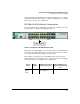
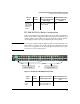
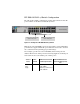
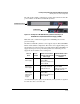
Figure 11-7. Example of an HP 3500-48G-PoE+ yl Switch
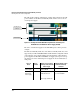
■ The lowest loaded bank of ports (1-24 or 25-48) has 22 watts reserved.
That power is available for use by the two highest priority ports in the
bank, (in a default configuration ports 1 and 2, or 25 and 26).
For example, the switch starts with 398 watts. Then it reserves 22 watts per
bank leaving 354 watts total for allocation. If ports 1-24 are chosen to be used
then the 22 watts that was held in reserve for that bank of ports will be added
back in for a total of 376 watts.
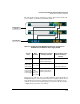
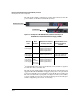
All 25 ports can receive up to 15.4
watts of PoE power
or
48 ports can receive up to 7.5
watts of PoE power
Source of
Power
Watts
Available
Number of Ports Powered
and Average watts/Port
Redundant Number of Ports
Powered and Average watts/
Port
Internal PoE
Power
Supply
398 12 @ average 30 W each
25 @ average 15.4 W each
48 @ average 7.5 W each
48 @ average 4.0 W each
None