
Multicast and Routing Guide K/KA/KB.15.15

Configuring an IPv6 Route
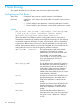
Syntax:
[no] ipv6 route dest-ip-addr / prefix-length [
next-hop-gateway-addr | vlan vid | tunnel
tunnel-id|blackhole|reject ] [metric metric] [distance1-255]
[tag-value tagval] [name <string>]
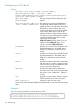
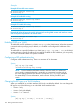
dest-ipv6-addr /
prefix-length
The network prefix for the destination IPv6
address.
next-hop-gateway-addr|vlan
<vid> | tunnel <tunnel-id>>
The gateway for reaching the destination.
The next-hop address option (link-local or
global unicast) is not required to be directly
reachable on a local subnet. (If it is not
directly reachable, the route will be added
to the routing table when a path to this
address is learned.) If the next-hop address
is link-local, it must include both the address
and the applicable VLAN VID or tunnel
<tunnel-id>. For example:
FE80::127%vlan10, where VLAN 10 is the
interface where FE80::127 exists. For a
tunnel, it would be FE80::127%tun3.
blackhole Specifies a null route where IP traffic for the
specified destination is discarded and no
ICMP error notification is returned to the
sender.
reject Specifies a null route where IP traffic for the
specified destination is discarded and an
ICMP error notification is returned to the
sender.
metric Specifies an integer value that is associated
with the route. It is used to compare a static
route to routes in the IP route table from other
sources to the same destination.
distance Specifies the administrative distance to
associate with a static route. If not specified,
this value is set to a default of 1. (Range: 1
to 255)
tag Specifies a unique integer value for a given
ECMP set (destination, metric, distance.)
name <name-str> Assigns a name to a static route.
The no form of the command deletes the specified static or null route from the routing
table.
Examples
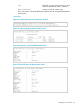
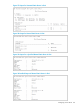
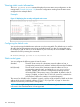
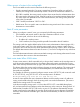
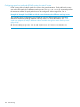
Figure 26 Configuring Names for Static Routes for IPv6
124 Static Routing