
Multicast and Routing Guide K/KA/KB.15.15

with a higher cost is considered unreachable. Although limiting to larger networks, the low maximum
hop count prevents endless loops in the network.
The switches support the following RIP types:
• Version 1
• V1 compatible with V2
• Version 2 (the default)
NOTE: If the routing switch receives an ARP request packet that it is unable to deliver to the final
destination because of the ARP timeout and no ARP response is received (the routing switch knows
of no route to the destination address), the routing switch sends an ICMP Host Unreachable message
to the source.
RIP parameters and defaults
The following tables list the RIP parameters, their default values, and where to find configuration
information.
RIP global parameters
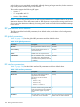
Table 10 (page 138) lists the global RIP parameters and their default values.
Table 10 RIP global parameters
DefaultDescriptionParameter
DisabledRouting Information Protocol V2-only.RIP state
EnabledEnable/disable advertisement of
summarized routes.
auto-summary
1Default metric for imported routes.metric
DisabledRIP can redistribute static, connected,
and OSPF routes. (RIP redistributes
redistribution
connected routes by default, when RIP
is enabled.)
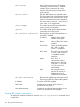
RIP interface parameters
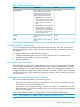
Table 11 (page 138) lists the VLAN interface RIP parameters and their default values.
Table 11 RIP interface parameters
DefaultDescriptionParameter
V2-onlyThe version of the protocol that is
supported on the interface.
The version can be one of the
following:
RIP version
• Version 1 only
• Version 2 only
• Version 1 or version 2
1A numeric cost the routing switch adds
to RIP routes learned on the interface.
metric
This parameter applies only to RIP
routes.
The routing switch learns and advertises
all RIP routes on all RIP interfaces
The routes that a routing switch learns
or advertises can be controlled.
IP address
138 Routing Information Protocol