
Multicast and Routing Guide K/KA/KB.15.15

the shortest path between itself and a desired destination router in the same OSPF domain
(AS.)Routed traffic in an OSPF AS is classified as one of the following:
• Intra-area traffic
• Inter-area traffic
• External traffic
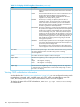
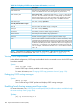
The switches support the following types of LSAs, which are described in RFCs 2328 and 3101:
Table 27 OSPF LSA types
UseLSA nameLSA type
Describes the state of each interface on a router for a given area. Not
propagated to backbone area.
Router link1
Describes the OSPF routers in a given network. Not propagated to backbone
area.
Network link2
Describes the route to networks in another OSPF area of the same AS.
Propagated through backbone area to other areas.
Summary link3
Describes the route to an ASBR in an OSPF normal or backbone area of the
same AS. Propagated through backbone area to other areas.
Autonomous System
(AS) summary link
4
Describes the route to a destination in another AS (external route.) Originated
by ASBR in normal or backbone areas of an AS and propagates through
backbone area to other normal areas.
AS external link5
For injection into an NSSA, ABR converts type-5 LSAs to a type-7 LSA
advertising the default route (0.0.0.0/0.)
Describes the route to a destination in another AS (external route.) Originated
by ASBR in NSSA.
AS external link in an
NSSA
7
ABR converts type-7 LSAs to type-5 LSAs for injection into the backbone area.
OSPF router types
Interior routers
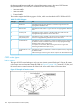
This type of OSPF router belongs to only one area. Interior routers flood type-1 LSAs to all routers
in the same area and maintain identical LSDBs. In Figure 37 (page 190), routers R1, R3, R4, and
R6 are all interior routers because all of their links are to other routers in the same area.
Figure 37 Example of interior routers
190 Open Shortest Path First Protocol (OSPF)