
Multicast and Routing Guide K/KA/KB.15.15
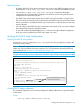
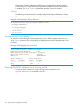
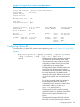
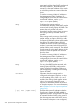
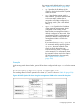
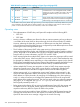
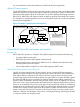
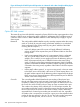

Figure 48 Example of DHCP Option 82 Operation in a Network with a Non-Compliant Relay Agent
Option 82 field content
The remote ID and circuit ID subfields comprise the Option 82 field a relay agent appends to client
requests. A DHCP server configured to apply a different IP addressing policy to different areas of
a network uses the values in these subfields to determine which DHCP policy to apply to a given
client request.
Remote ID This configurable subfield identifies a policy area that comprises either the routing
switch as a whole (by using the routing switch MAC address) or an individual
VLAN configured on the routing switch (by using the IP address of the VLAN
receiving the client request.)
• Use the IP address option if the server will apply different IP addressing
policies to DHCP client requests from ports in different VLANs on the same
routing switch.
• Use the management VLAN option if a management VLAN is configured
and you want all DHCP clients on the routing switch to use the same IP
address. (This is useful if you are applying the same IP addressing policy to
DHCP client requests from ports in different VLANs on the same routing
switch.) Configuring this option means the management VLAN's IP address
appears in the remote ID subfield of all DHCP requests originating with clients
connected to the routing switch, regardless of the VLAN on which the requests
originate.
• Use the MAC address option if, on a given routing switch, it does not matter
to the DHCP server which VLAN is the source of a client request (that is, use
the MAC address option if the IP addressing policies supported by the target
DHCP server do not distinguish between client requests from ports in different
VLANs in the same routing switch.)
Circuit ID This nonconfigurable subfield identifies the port number of the physical port
through which the routing switch received a given DHCP client request and is
necessary to identify if you want to configure an Option 82 DHCP server to use
the Circuit ID to select a DHCP policy to assign to clients connected to the port.
This number is the identity of the inbound port. On HP fixed-port switches, the
port number used for the circuit ID is always the same as the physical port number
shown on the front of the switch. On HP chassis switches, where a dedicated,
sequential block of internal port numbers are reserved for each slot, regardless
of whether a slot is occupied, the circuit ID for a given port is the sequential index
number for that port position in the slot. (To view the index number assignments
for ports in the routing switch, use the walkmib ifname command.)
240 Dynamic Host Configuration Protocol