
Multicast and Routing Guide K/KA/KB.15.15
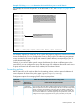

For more information, including a listing of UDP/TCP port numbers, go to the Internet Assigned
Numbers Authority (IANA) website at:
www.iana.org
Then click on:
Protocol Number Assignment Services
P (Under "Directory of General Assigned Numbers" heading)
Port Numbers
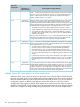
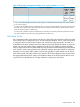
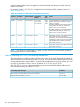
Messages related to UDP broadcast forwarding
MeaningMessage
Appears in the CLI if an attempt to enable UDP broadcast
forwarding has been made without IP routing being
udp-bcast-forward: IP Routing
support must be enabled first.
enabled first. Enable IP routing, then enable UDP broadcast
forwarding.
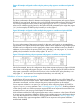
UDP broadcast forwarding has been globally enabled on
the router. Appears in the Event Log and, if configured, in
SNMP traps.
UDP broadcast forwarder feature
enabled
UDP broadcast forwarding has been globally disabled on
the routing switch. This action does not prevent you from
UDP broadcast forwarder feature
disabled
configuring UDP broadcast forwarding addresses, but does
prevent UDP broadcast forwarding operation. Appears in
the Event Log and, if configured, in SNMP traps.
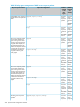
Appears in the CLI if you attempt to disable routing while
UDP forwarding is enabled on the switch.
UDP broadcast forwarder must be
disabled first.
UDP broadcast forwarding
Some applications rely on client requests sent as limited IP broadcasts addressed to a UDP
application port. If a server for the application receives such a broadcast, the server can reply to
the client. Since typical router behavior, by default, does not allow broadcast forwarding, a client's
UDP broadcast requests cannot reach a target server on a different subnet unless the router is
configured to forward client UDP broadcasts to that server.
A switch with routing enabled includes optional per-VLAN UDP broadcast forwarding that allows
up to 256 server and/or subnet entries on the switch (16 entries per-VLAN.) If an entry for a
particular UDP port number is configured on a VLAN, and an inbound UDP broadcast packet with
that port number is received on the VLAN, the switch routes the packet to the appropriate subnet.
(Each entry can designate either a single device or a single subnet. The switch ignores any entry
that designates multiple subnets.)
NOTE: The number of UDP broadcast forwarding entries supported is affected by the number of
IP helper addresses configured to support DHCP relay. See “Operating notes for UDP broadcast
forwarding” (page 248).
A UDP forwarding entry includes the desired UDP port number and can be either an IP unicast
address or an IP subnet broadcast address for the subnet the server is in. Thus, an incoming UDP
packet carrying the configured port number will be:
• Forwarded to a specific host if a unicast server address is configured for that port number.
• Broadcast on the appropriate destination subnet if a subnet address is configured for that port
number.
A UDP forwarding entry for a particular UDP port number is always configured in a specific VLAN
and applies only to client UDP broadcast requests received inbound on that VLAN. If the VLAN
UDP broadcast forwarding 249