
Multicast and Routing Guide K/KA/KB.15.15
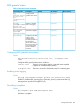
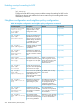
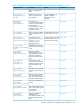
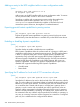
Specifying the number of times the autonomous system can appear in an AS path
Syntax:
[no]neighbor ipv4-addr allowas-in num-loops
Specifies the number of times this autonomous system can appear in an AS path.
When not configured, or when using theno version of the command, the value of
as-loops is set to its default value of 1.
Replacing occurrences of peer's AS with one from an export
Syntax:
[no] neighbor ipv4-addr as-override
Causes all occurrences of our peer’s AS to be replaced with one from an export.
Allowing BGP to keep routes without AS number
Syntax:
[no] neighbor ipv4-addr ignore-leading-as
Some routers are capable of propagating routes without appending their own
autonomous system number to the AS Path. By default, BGP will drop such routes.
Turning this parameter “on” allows BGP to keep these routes. This option should
be used only if there is no doubt that these peers are not normal routers.
Identifying the AS that BGP is representing to a peer
Syntax:
[no] neighbor ipv4-addr local-as as-#
Identifies the autonomous system (AS) that BGP is representing to a peer. The default
AS number for this command is the current AS (configured with the router bgp
command in Global Configuration mode.) This command is valid only for external
peers.
Specifying maximum number of routes for installation into the RIB
Syntax:
[no] neighbor ipv4-addr maximum-prefix max-routes
Specifies the maximum number of routes that BGP will accept for installation into
the RIB. The value defaults to “unlimited” if not specified, or if using the no version
of the command.
Specifying the amount of time route is present in database before exported to BGP
Syntax:
[no] neighbor ipv4-addr out-delay sec
The specified integer represents the amount of time a route must be present in the
routing database before it is exported into BGP. Defaults to 0 if not specified or if
unconfigured by using the no version of command.
Neighbor configuration and neighbor policy configuration 299