
Multicast and Routing Guide K/KA/KB.15.15

group "X", in which case the router cancels the prune state and changes the flow to the forwarding
state.
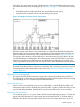
State-refresh packets and bandwidth conservation
A multicast switch, if directly connected to a multicast source (such as a video conference
application), periodically transmit state-refresh packets to downstream multicast routers. On routers
that have pruned the multicast flow, the state-refresh packets keep the pruned state alive. On routers
that have been added to the network after the initial flooding and pruning of a multicast group,
the state-refresh packets inform the newly added router of the current state of that branch. This
means that if all multicast routers in a network support the state-refresh packet, the multicast router
directly connected to the multicast source performs only one flood-prune cycle to the edge of the
network when a new flow (multicast group) is introduced and preserves bandwidth for other uses.
NOTE: Some vendors' multicast routers do not offer the state-refresh feature. In this case, PIM-DM
must periodically advertise an active multicast group to these devices by repeating the flood/prune
cycle on the paths to such routers. For better traffic management in multicast-intensive networks
where some multicast routers do not offer the state-refresh feature, you may want to group such
routers where the increased bandwidth usage will have the least effect on overall network
performance.
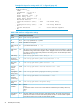
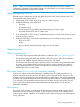
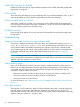
Figure 11 Bandwidth conservation in switches with PIM-DM state-refresh
General configuration elements
PM-DM requires you to configure the following elements:
• IP routing enabled on all routing switches you want to carry routed multicast traffic.
• Routing methods needed to reach the interfaces (VLANs) on which you want multicast traffic
available for hosts in your network:
• Enable RIP or OSPF at both the global and VLAN levels on the routers where there are
connected hosts that may issue multicast joins.
• Configure static routes to and from the destination subnets.
• Enable IP multicast routing.
• Enable IGMP on each VLAN when that VLAN has hosts that you want to join multicast groups.
Repeat this action on every switch and router belonging to the VLAN.
• Enable PIM-DM at the global level on the routing switch and on the VLANs where you want
to allow routed multicast traffic.
58 PIM-DM (Dense Mode)