
Multicast and Routing Guide K/KA/KB.15.15
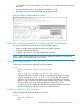
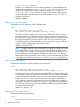
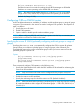
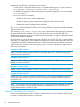
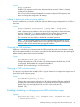
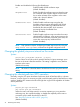
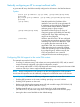
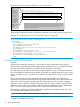
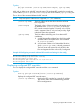
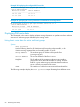

Figure 15 Example of enabling PIM-SM in the router PIM context
HP Switch(config)# router pim
HP Switch(pim)# bsr-candidate source-ip-vlan 120
HP Switch(pim)# rp-candidate source-ip-vlan 120
HP Switch(pim)# rp-candidate group-prefix 231.128.64.0/18
HP Switch(pim)# rp-candidate group-prefix 230.255.1.1/32
HP Switch(pim)# no rp-candidate group-prefix 224.0.0.0/4
HP Switch(pim)# rp-address 120.11.10.1 231.128.64.0/18
override
HP Switch(pim)#
Enters Router PIM
context.
Configures and
automatically
enables C-BSR
operation for all
possible groups
(224.0.0.0/4).
Removes support
for the default
group entry for all
possible groups
(224.0.0.0/4).
Configures static-
RP support with
override.
Note: The static RP takes precedence over the C-RP for multicast groups in the range of 231.128.64.0/
18 because the mask configured for the static RP meets the criteria of being either equal to or greater
than the mask configured for the same group in the C-RP. For example, if the mask for the static-RP
was 17 or less, the override would not take effect (even though configured), and the C-RP
configuration would take precedence.
The next figure illustrates the results of the above commands in the router's running configuration.
Example 37 Configuration results of the commands in Figure 15 (page 78)
HP Switch(pim)# show running configuration:
router pim
bsr-candidate
bsr-candidate source-ip-vlan 120
bsr-candidate priority 1
rp-address 120.10.10.2 231.128.64.255 255.255.255.255
rp-candidate
rp-candidate source-ip-vlan 120
rp-candidate group-prefix 230.255.1.1 255.255.255.255
rp-candidate group-prefix 231.128.64.0
255.255.192.0 rp-candidate hold-time 150
exit
Configuring PIM RPF override
Overview
Reverse Path Forward (RPF) checking is a core multicast routing mechanism that ensures that
multicast traffic received arrived on the expected router interface before it is considered for further
processing. If the RPF check fails for a multicast packet, the packet is discarded.
For traffic arriving on the SPT, the expected incoming interface for a given source/group multicast
flow is the interface towards the source address of the traffic (as determined by the unicast routing
system.) For traffic arriving on the RP tree, the expected incoming interface is the interface towards
the RP.
RPF override is an HP networking feature that allows the override of the normal RPF lookup
mechanism and indicates to the router that it may accept multicast traffic on an interface other than
that which would be normally selected by the RPF lookup mechanism. This includes accepting
traffic from a source directly connected to the router when the source IP address is invalid for the
subnet or VLAN to which it is connected. Traffic may also be accepted from a valid PIM neighbor
that is not on the reverse path towards the source of the received multicast traffic.
RPF checking is applied to all multicast traffic and is significant in preventing network loops. Up
to eight manual RPF overrides can be specified.
NOTE: These static RPF override entries are not distributed.
The manually configured static multicast RPF override is restored on subsequent reboots. The
command is executed in PIM context.
78 PIM-SM (Sparse Mode)