
R211x-HP Flexfabric 11900 ACL and QoS Command Reference

88
Usage guidelines
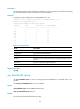
You must use the qos wfq command to enable WFQ before you can configure WFQ queuing parameters
for a queue on an interface.
Examples
# Enable weight-based WFQ on Ten-GigabitEthernet 1/0/1.
<Sysname> system-view
[Sysname] interface Ten-GigabitEthernet 1/0/1
[Sysname-Ten-GigabitEthernet1/0/1] qos wfq weight
# Enable byte-count WFQ on Ten-GigabitEthernet 1/0/1.
<Sysname> system-view
[Sysname] interface Ten-GigabitEthernet 1/0/1
[Sysname-Ten-GigabitEthernet1/0/1] qos wfq byte-count
Related commands
display qos queue wfq interface
qos wfq { byte-count | weight }
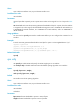
Use qos wfq { byte-count | weight } to assign a queue to a WFQ group with a certain scheduling weight.
Use undo qos wfq to restore the default.
Syntax
qos wfq queue-id group { 1 | 2 } { byte-count | weight } schedule-value
undo qos wfq queue-id
Default
When WFQ queuing is used on an interface, all the queues are in WFQ group 1 and have a weight of
1.
Views
Layer 2 Ethernet interface view, Layer 3 Ethernet interface view
Predefined user roles
network-admin
mdc-admin
Parameters
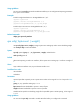
queue-id: Specifies a queue by its ID. A queue ID is a number in the range of 0 to 7 or a keyword in Table
32.
gr
oup { 1 | 2 }: Specifies WFQ group 1 or 2.
byte-count: Allocates bandwidth to queues in terms of bytes.
weight: Allocates bandwidth to queues in terms of packets.
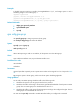
schedule-value: Specifies a scheduling weight for the specified queue in WFQ queuing, in the range of
1 to 15.
Usage guidelines
You must use the qos wfq command to enable WFQ first before you configure this command.