
R211x-HP Flexfabric 11900 ACL and QoS Configuration Guide

43
Configuring congestion management
Overview
Congestion occurs on a link or node when traffic size exceeds the processing capability of the link or
node. It is typical of a statistical multiplexing network and can be caused by link failures, insufficient
resources, and various other causes.
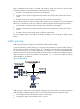
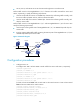
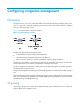
Figure 13 sh
ows two typical congestion scenarios.
Figure 13 Traffic congestion scenarios
Congestion brings the following negative results:
• Increased delay and jitter during packet transmission
• Decreased network throughput and resource use efficiency
• Network resource (memory in particular) exhaustion and even system breakdown
Congestion is unavoidable in switched networks and multi-user application environments. To improve the
service performance of your network, take measures to manage and control it.
The key to congestion management is defining a resource dispatching policy to prioritize packets for
forwarding when congestion occurs.
Congestion management uses queuing and scheduling algorithms to classify and sort traffic leaving a
port.
Queue scheduling prioritizes packets to transmit high-priority packets preferentially. The switch supports
Strict Priority (SP) queuing, Weighted Round Robin (WRR) queuing, Weighted Fair Queuing (WFQ),
SP+WRR queuing, and SP+WFQ queuing.
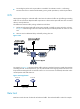
SP queuing
SP queuing is designed for mission-critical applications that require preferential service to reduce the
response delay when congestion occurs.