
R211x-HP Flexfabric 11900 IP Multicast Configuration Guide

82
• Configure a unicast routing protocol so that all devices in the domain are interoperable at the
network layer.
• Configure PIM-DM, or PIM-SM.
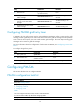
Configuring a multicast data filter
In either a PIM-DM domain or a PIM-SM domain, routers can check passing-by multicast data and
determine whether to continue forwarding the multicast data based on the configured filtering rules. You
can configure a PIM router to act as a multicast data filter to help implement traffic control and control the
information available to downstream receivers.
A filter can filter not only independent multicast data but also multicast data encapsulated in register
messages. Generally, a filter nearer to the multicast source has a better filtering effect.
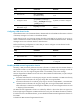
To configure a multicast data filter:
Ste
p
Command Remarks
1. Enter system view.
system-view N/A
2. Enter PIM view.
pim [ vpn-instance
vpn-instance-name ]
N/A
3. Configure a multicast data
filter:
source-policy acl-number
By default, no multicast data filter is
configured.
Configuring a hello message filter
Along with the wide applications of PIM, the security requirement for the protocol is becoming
increasingly demanding. The establishment of correct PIM neighboring relationships is the prerequisite
for secure application of PIM.
To guard against PIM message attacks, you can configure a legal source address range for hello
messages on interfaces of routers to ensure the correct PIM neighboring relationships.
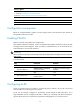
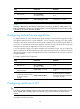
To configure a hello message filter:
Ste
p
Command
Remarks
1. Enter system view.
system-view
N/A
2. Enter interface view.
interface interface-type
interface-number
N/A
3. Configure a hello message
filter.
pim neighbor-policy acl-number
By default, no hello message filter
exists.
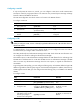
If a PIM neighbor's hello messages
cannot pass the filter, the neighbor
is automatically removed when its
maximum number of hello attempts
is reached.