
R211x-HP Flexfabric 11900 MPLS Configuration Guide

321
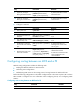
Ste
p
Command
Remarks
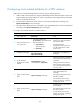
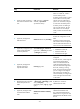
9. (Optional.) Configure
filtering of advertised routes.
filter-policy { acl-number |
prefix-list prefix-list-name }
export [ protocol process-id ]
By default, BGP does not filter
advertised routes.
10. (Optional.) Configure
filtering of received routes.
filter-policy { acl-number |
prefix-list prefix-list-name }
import
By default, BGP does not filter
received routes.
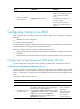
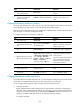
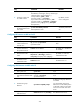
2. Configure a VPN site:
Ste
p
Command
Remarks
1. Enter system view.
system-view N/A
2. Enter BGP view.
bgp as-number N/A
3. Configure the MCE as an
IBGP peer.
peer { group-name | ip-address }
as-number as-number
N/A
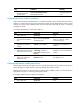
4. Enter BGP-VPN IPv4 unicast
address family view.
address-family ipv4 [ unicast ] N/A
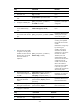
5. Enable BGP to exchange
IPv4 unicast routes with the
peer.
peer { group-name | ip-address }
enable
By default, BGP does not
exchange IPv4 unicast routes
with any peer.
6. Redistribute the IGP routes
of the VPN into BGP.
import-route protocol
[ { process-id | all-processes }
[ med med-value | route-policy
route-policy-name ] * ]
By default, no routes are
redistributed into BGP.
A VPN site must advertise VPN
network addresses to the
connected MCE.
Configuring routing between an MCE and a PE
MCE-PE routing configuration includes the following tasks:
• Binding the MCE-PE interfaces to VPN instances.
• Performing route configurations.
• Redistributing VPN routes into the routing protocol running between the MCE and the PE.
Perform the following configurations on the MCE. Configure the PE in the same way that a PE in a basic
MPLS L3VPN is configured. For more information about configuring the PE, see "Configuring MPLS
L3VPN
."
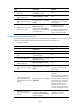
Configuring static routing between an MCE and a PE
Ste
p
Command
Remarks
1. Enter system view.
system-view
N/A