
R211x-HP Flexfabric 11900 Network Management and Monitoring Configuration Guide


151
Remote port mirroring
In remote port mirroring, the source device is not directly connected to the data monitoring device but
copies mirrored packets to the destination device, which forwards them to the data monitoring device.
The mirroring source and the mirroring destination reside on different devices and in different mirroring
groups. The mirroring group that contains the mirroring source or the mirroring destination is called a
"remote source group" or "remote destination group", respectively. The devices between the source
devices and destination device are intermediate devices.
Remote port mirroring includes Layer 2 and Layer 3 remote port mirroring.
• Layer 2 remote port mirroring—The mirroring source and the mirroring destination are located on
different devices on a same Layer 2 network.
• Layer 3 remote port mirroring—The mirroring source and the mirroring destination are separated
by IP networks.
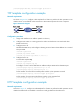
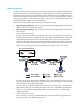
1. Layer 2 remote port mirroring
The source device copies packets received on the source port to the egress port. The egress port
forwards the packets to the intermediate devices, which then broadcast the packets in the remote
probe VLAN and transmit the packets to the destination device. Upon receiving the mirrored
packets, the destination device checks whether their VLAN IDs are the same as the remote probe
VLAN ID. If yes, the device forwards them to the data monitoring device through the monitor port.
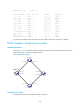
Figure 54 Layer 2 remote port mirroring implementation through the egress port method
To make sure the source device and the destination device can communicate at Layer 2 through
the remote probe VLAN, assign the intermediate devices' ports in the direction to the source and
destination devices to the remote probe VLAN.
To monitor both the received and sent packets of a port in a mirroring group, you must disable
MAC address learning for the remote probe VLAN on the source, intermediate, and destination
devices. For more information about MAC address learning, see Layer 2 — LAN Switching
Configuration Guide.
2. Layer 3 remote port mirroring
Layer 3 remote port mirroring is implemented through creating a local mirroring group on the
source device and one on the destination device.