
R211x-HP Flexfabric 11900 Security Configuration Guide

137
Ste
p
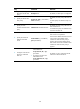
Command
Remarks
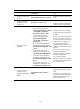
8. Configure keys for the
IPsec SA.
• Configure an authentication
key in hexadecimal format for
AH:
sa hex-key authentication
{ inbound | outbound } ah
{ cipher | simple } key-value
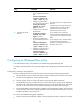
• Configure an authentication
key in character format for AH:
sa string-key { inbound |
outbound } ah { cipher |
simple } key-value
• Configure a key in character
format for ESP:
sa string-key { inbound |
outbound } esp { cipher |
simple } key-value
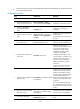
• Configure an authentication
key in hexadecimal format for
ESP:
sa hex-key authentication
{ inbound | outbound } esp
{ cipher | simple } key-value
• Configure an encryption key in
hexadecimal format for ESP:
sa hex-key encryption
{ inbound | outbound } esp
{ cipher | simple } key-value
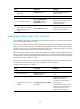
By default, no keys are configured for the
IPsec SA.
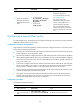
Configure keys correctly for the security
protocol (AH, ESP, or both) you have
specified in the IPsec transform set
referenced by the IPsec policy.
If you configure a key in both the
character and the hexadecimal formats,
only the most recent configuration takes
effect.
If you configure a key in character format
for ESP, the device automatically
generates an authentication key and an
encryption key for ESP.
Configuring an IKE-based IPsec policy
In an IKE-based IPsec policy, the parameters are automatically negotiated through IKE.
To configure an IKE-based IPsec policy, directly configure it by configuring the parameters in IPsec policy
view.
Configuration restrictions and guidelines
The IPsec configurations at the two ends of an IPsec tunnel must meet the following requirements:
• The IPsec policies at the two tunnel ends must have IPsec transform sets that use the same security
protocols, security algorithms, and encapsulation mode.
• The IPsec policies at the two tunnel ends must have the same IKE profile parameters.
• An IKE-based IPsec policy can reference up to six IPsec transform sets. During an IKE negotiation,
IKE searches for a fully matched IPsec transform set at the two ends of the IPsec tunnel. If no match
is found, no SA can be set up, and the packets expecting to be protected will be dropped.
• The remote IP address of the IPsec tunnel is required on an IKE negotiation initiator and is optional
on the responder. The remote IP address specified on the local end must be the same as the local
IP address specified on the remote end.
For an IPsec SA established through IKE negotiation:
• The IPsec SA uses the local lifetime settings or those proposed by the peer, whichever are smaller.