
R211x-HP Flexfabric 11900 Security Configuration Guide

157
Ste
p
Command
Remarks
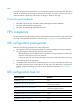
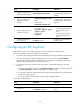
3. Configure a pre-shared key.
pre-shared-key { address
{ ipv4-address [ mask | mask-length ] |
ipv6 ipv6-address [ prefix-length ] } |
hostname host-name } key { cipher
cipher-key | simple simple-key }
By default, no pre-shared key is
configured.
For security purposes, all
pre-shared keys, including those
configured in plain text, are
saved in cipher text to the
configuration file.
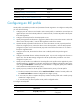
4. (Optional.) Specify a local
interface or IP address to
which the IKE keychain can
be applied.
match local address { interface-type
interface-number | { ipv4-address |
ipv6 ipv6-address } [ vpn-instance
vpn-name ] }
By default, an IKE keychain can
be applied to any local interface
or IP address.
5. (Optional.) Specify a
priority for the IKE keychain.
priority number The default priority is 100.
Configuring the global identity information
Follow these guidelines when you configure the global identity information for the local IKE:
• The global identity can be used by the device for all IKE SA negotiations, and the local identity (set
by the local-identity command) can be used only by the device that uses the IKE profile.
• When pre-shared key authentication is used, you cannot set the DN as the identity.
To configure the global identity information:
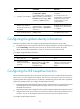
Ste
p
Command
Remarks
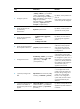
1. Enter system view.
system-view N/A
2. Configure the global
identity to be used by the
local end.
ike identity { address { ipv4-address |
ipv6 ipv6-address } | dn | fqdn
[ fqdn-name ] | user-fqdn
[ user-fqdn-name ] }
By default, the IP address of the
interface to which the IPsec policy
is applied is used as the IKE
identity.
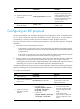
Configuring the IKE keepalive function
IKE sends keepalive packets to query the liveness of the peer. If the peer is configured with the keepalive
timeout time, you must configure the keepalive interval on the local device. If the peer receives no
keepalive packets during the timeout time, the IKE SA is deleted along with the IPsec SAs it negotiated.
Follow these guidelines when you configure the IKE keepalive function:
• Configure IKE DPD instead of the IKE keepalive function unless IKE DPD is not supported on the peer.
The IKE keepalive function sends keepalives at regular intervals, which consumes network
bandwidth and resources.
• The keepalive timeout time configured on the local device must be longer than the keepalive interval
configured at the peer. Since it seldom occurs that more than three consecutive packets are lost on
a network, you can set the keepalive timeout three times as long as the keepalive interval.
To configure the IKE keepalive function: