
R211x-HP Flexfabric 11900 TRILL Configuration Guide



14
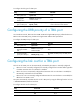
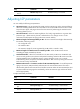
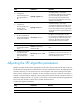
3. Set the SPF calculation
interval for TRILL.
timer spf maximum-interval
[ minimum-interval
[ incremental-interval ] ]
By default, the maximum SPF calculation
interval is 10 seconds, the minimum SPF
calculation interval is 10 milliseconds, and
the SPF calculation incremental interval is 20
milliseconds.
Configuring the TRILL unicast equal-cost routes
Configuring multiple equal-cost routes to the same destination implements load balancing among these
links and improves the link efficiency. You can configure the maximum number of TRILL unicast equal-cost
routes.
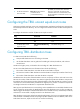
To configure the maximum number of TRILL unicast equal-cost routes:
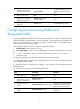
Step Command Remarks
1. Enter system view.
system-view N/A
2. Enter TRILL view.
trill N/A
3. Configure the maximum
number of TRILL unicast
equal-cost routes.
max-unicast-load-balancing
number
The default setting is 16.
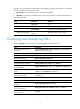
Configuring TRILL distribution trees
In a TRILL network, RBs do the following:
• Compute TRILL distribution trees according to the LSDB.
• Use the TRILL distribution trees to guide the forwarding of multicast, broadcast, and unknown
unicast frames.
An RB with a higher priority is selected as the root bridge of a TRILL distribution tree.
An LSP carries TRILL distribution tree information that includes the following:
• The number of TRILL distribution trees that the RB wants all RBs to compute.
• The maximum number of TRILL distribution trees that the RB can compute (this number is fixed at 15).
• The number of TRILL distribution trees that the RB has computed.
An RB determines the number of TRILL distribution trees to compute (n) as follows: select the lower value
between the number of TRILL distribution trees that the highest-priority RB wants all RBs to compute and
the smallest value of the maximum number of TRILL distribution trees that each RB can compute. From the
nickname list in the LSP advertised by the RB with the highest priority, the first n nicknames comprise the
root bridge list that the local RB uses to compute TRILL distribution trees.
TRILL supports rapid distribution tree root switching. When an RB detects an unreachable distribution tree
root by computing unicast paths, the RB deletes the LSPs of the distribution tree root from its LSDB. LSP
deletion triggers recalculation of multicast distribution trees in the TRILL network, and multicast, broadcast,
and unknown unicast traffic is rapidly switched to new distribution trees.
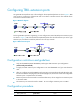
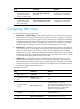
TRILL distribution trees support Equal Cost Multiple Path (ECMP), also known as multicast ECMP. When
multicast ECMP is disabled, because the topologies of TRILL distribution trees are different, traffic can be
load shared. However, equal-cost links are not used for load sharing.