
R21xx-HP FlexFabric 11900 ACL and QoS Command Reference
24
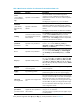
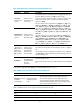
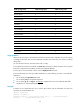
Parameters
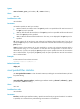
rule-id: Specifies a rule ID in the range of 0 to 65534. If no rule ID is provided when you create an ACL
rule, the system automatically assigns it a rule ID. This rule ID takes the nearest higher multiple of the
numbering step to the current highest rule ID, starting from 0. For example, if the rule numbering step is
5 and the current highest rule ID is 28, the rule is numbered 30.
deny: Denies matching packets.
permit: Allows matching packets to pass.
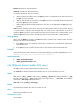
counting: Counts the number of times the IPv4 basic ACL rule has been matched. The counting keyword
enables match counting specific to rules, and the hardware-count keyword in the packet-filter command
enables match counting for all rules in an ACL. If the counting keyword is not specified, matches for the
rule are not counted.
fragment: Applies the rule only to non-first fragments. A rule without this keyword applies to both
fragments and non-fragments.
logging: Logs matching packets. This function is available only when the application module (for
example, packet filtering) that uses the ACL supports the logging function.
source { source-address source-wildcard | any }: Matches a source address. The source-address
source-wildcard arguments represent a source IP address and wildcard mask in dotted decimal notation.
A wildcard mask of zeros specifies a host address. The any keyword represents any source IP address.
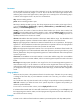
time-range time-range-name: Specifies a time range for the rule. The time-range-name argument is a
case-insensitive string of 1 to 32 characters. It must start with an English letter. If the time range is not
configured, the system creates the rule. However, the rule using the time range can take effect only after
you configure the timer range. For more information about time range, see ACL and QoS Configuration
Guide.
vpn-instance vpn-instance-name: Applies the rule to packets in a VPN instance. The vpn-instance-name
argument takes a case-sensitive string of 1 to 31 characters. If no VPN instance is specified, the rule
applies only to non-VPN packets.
Usage guidelines
Within an ACL, the permit or deny statement of each rule must be unique. If the ACL rule you are creating
or editing has the same deny or permit statement as another rule in the ACL, your creation or editing
attempt fails.
You can edit ACL rules only when the match order is config.
If no optional keywords are provided for the undo rule command, you delete the entire rule. If optional
keywords or arguments are provided, you delete the specified attributes.
To view rules in an ACL and their rule IDs, use the display acl all command.
If an IPv4 basic ACL is for QoS traffic classification or packet filtering, do not specify the vpn-instance
keyword. The keyword can cause ACL application failure.
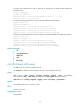
Examples
# Create a rule in IPv4 basic ACL 2000 to deny the packets from any source IP segment but 10.0.0.0/8,
172.17.0.0/16, or 192.168.1.0/24.
<Sysname> system-view
[Sysname] acl number 2000
[Sysname-acl-basic-2000] rule permit source 10.0.0.0 0.255.255.255
[Sysname-acl-basic-2000] rule permit source 172.17.0.0 0.0.255.255
[Sysname-acl-basic-2000] rule permit source 192.168.1.0 0.0.0.255