
R21xx-HP FlexFabric 11900 ACL and QoS Command Reference

28
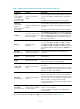
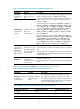
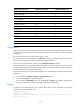
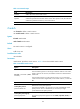
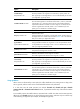
ICMPv6 messa
g
e
name ICMPv6 messa
g
e
t
yp
e
ICMPv6 messa
g
e code
frag-time-exceeded 3 1
hop-limit-exceeded 3 0
host-admin-prohib 1 1
host-unreachable 1 3
neighbor-advertisement 136 0
neighbor-solicitation 135 0
network-unreachable 1 0
packet-too-big 2 0
port-unreachable 1 4
redirect 137 0
router-advertisement 134 0
router-solicitation 133 0
unknown-ipv6-opt 4 2
unknown-next-hdr 4 1
Usage guidelines
Within an ACL, the permit or deny statement of each rule must be unique. If the ACL rule you are creating
or editing has the same deny or permit statement as another rule in the ACL, your creation or editing
attempt fails.
You can edit ACL rules only when the match order is config.
If no optional keywords are provided in the undo rule command, you delete the entire rule. If optional
keywords or arguments are provided, you delete the specified attributes.
To view rules in an ACL and their rule IDs, use the display acl ipv6 all command.
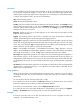
IPv6 advanced ACLs can match IPv6 packets with all types of extension headers. If the ACL is to match
the data from the upper layer in the packet payload, make sure the IPv6 packets have up to two extension
headers and have no IPv6 encapsulation header.
If an IPv6 advanced ACL is for QoS traffic classification or packet filtering, to ensure a successful ACL
application:
• Do not specify the fragment, routing, or vpn-instance keywords.
• Do not specify neq for the operator argument.
• Do not specify the flow-label keyword, or specify gt, lt, or range for the operator argument if the
ACL is for outbound QoS traffic classification or outbound packet filtering.
Examples
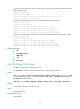
# Create an IPv6 advanced ACL rule to permit TCP packets with the destination port 80 from
2030:5060::/64 to FE80:5060::/96.
<Sysname> system-view
[Sysname] acl ipv6 number 3000
[Sysname-acl6-adv-3000] rule permit tcp source 2030:5060::/64 destination fe80:5060::/96
destination-port eq 80