
R21xx-HP FlexFabric 11900 IP Multicast Configuration Guide
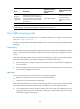

Table Of Contents
- Title Page
- Contents
- Multicast overview
- Configuring IGMP snooping
- Overview
- IGMP snooping configuration task list
- Configuring basic IGMP snooping functions
- Configuring IGMP snooping port functions
- Configuring IGMP snooping policies
- Displaying and maintaining IGMP snooping
- IGMP snooping configuration examples
- Troubleshooting IGMP snooping
- Configuring multicast routing and forwarding
- Configuring IGMP
- Configuring PIM
- Overview
- Configuring PIM-DM
- Configuring PIM-SM
- Configuring common PIM features
- Displaying and maintaining PIM
- PIM configuration examples
- Troubleshooting PIM
- Configuring MLD snooping
- Overview
- MLD snooping configuration task list
- Configuring basic MLD snooping functions
- Configuring MLD snooping port functions
- Configuring MLD snooping policies
- Displaying and maintaining MLD snooping
- MLD snooping configuration examples
- Troubleshooting MLD snooping
- Configuring IPv6 multicast routing and forwarding
- Configuring MLD
- Configuring IPv6 PIM
- PIM overview
- Configuring IPv6 PIM-DM
- Configuring IPv6 PIM-SM
- Configuring common IPv6 PIM features
- Displaying and maintaining IPv6 PIM
- IPv6 PIM configuration examples
- Troubleshooting IPv6 PIM
- Support and other resources
- Index

109
multicast group address. The switch removes the port from the forwarding entry for the IPv6
multicast group after the aging timer for the port expires.
Protocols and standards
R F C 4541, Considerations for Internet Group Management Protocol (IGMP) and Multicast Listener
Discovery (MLD) Snooping Switches
MLD snooping configuration task list
Task at a
g
lance
Configuring basic MLD snooping functions
• (Required.) Enabling MLD snooping
• (Optional.) Specifying the MLD snooping version
• (Optional.) Setting the maximum number of MLD snooping forwarding entries
• (Optional.) Configuring parameters for MLD queries and responses
Configuring MLD snooping port functions
(Optional.) Setting aging timers for dynamic ports
(Optional.) Configuring static ports
(Optional.) Enabling MLD snooping fast-leave processing
Configuring MLD snooping policies
(Optional.) Configuring an IPv6 multicast group filter
(Optional.) Enabling dropping unknown IPv6 multicast data
(Optional.) Setting the maximum number of IPv6 multicast groups on a port
(Optional.) Enabling the IPv6 multicast group replacement function
For MLD snooping, the configurations made on a Layer 2 aggregate interface do not interfere with the
configurations made on its member ports, and they do not take part in aggregation calculations. The
configuration made on a member port of the aggregate group takes effect after the port leaves the
aggregate group.
Configuring basic MLD snooping functions
Before you configure basic MLD snooping functions, complete the following tasks:
• Configure the corresponding VLANs.
• Determine the MLD snooping version.
• Determine the MLD last-listener query interval.
• Determine the maximum response delay for MLD general queries.