
R21xx-HP FlexFabric 11900 IP Multicast Configuration Guide
Table Of Contents
- Title Page
- Contents
- Multicast overview
- Configuring IGMP snooping
- Overview
- IGMP snooping configuration task list
- Configuring basic IGMP snooping functions
- Configuring IGMP snooping port functions
- Configuring IGMP snooping policies
- Displaying and maintaining IGMP snooping
- IGMP snooping configuration examples
- Troubleshooting IGMP snooping
- Configuring multicast routing and forwarding
- Configuring IGMP
- Configuring PIM
- Overview
- Configuring PIM-DM
- Configuring PIM-SM
- Configuring common PIM features
- Displaying and maintaining PIM
- PIM configuration examples
- Troubleshooting PIM
- Configuring MLD snooping
- Overview
- MLD snooping configuration task list
- Configuring basic MLD snooping functions
- Configuring MLD snooping port functions
- Configuring MLD snooping policies
- Displaying and maintaining MLD snooping
- MLD snooping configuration examples
- Troubleshooting MLD snooping
- Configuring IPv6 multicast routing and forwarding
- Configuring MLD
- Configuring IPv6 PIM
- PIM overview
- Configuring IPv6 PIM-DM
- Configuring IPv6 PIM-SM
- Configuring common IPv6 PIM features
- Displaying and maintaining IPv6 PIM
- IPv6 PIM configuration examples
- Troubleshooting IPv6 PIM
- Support and other resources
- Index
129
• Configure an IPv6 unicast routing protocol so that all devices in the domain are interoperable at the
network layer.
• Configure IPv6 PIM-DM or IPv6 PIM-SM.
Configuring the RPF route selection rule
You can configure the router to select the RPF route based on the longest prefix match principle. For more
information about RPF route selection, see "RPF check process."
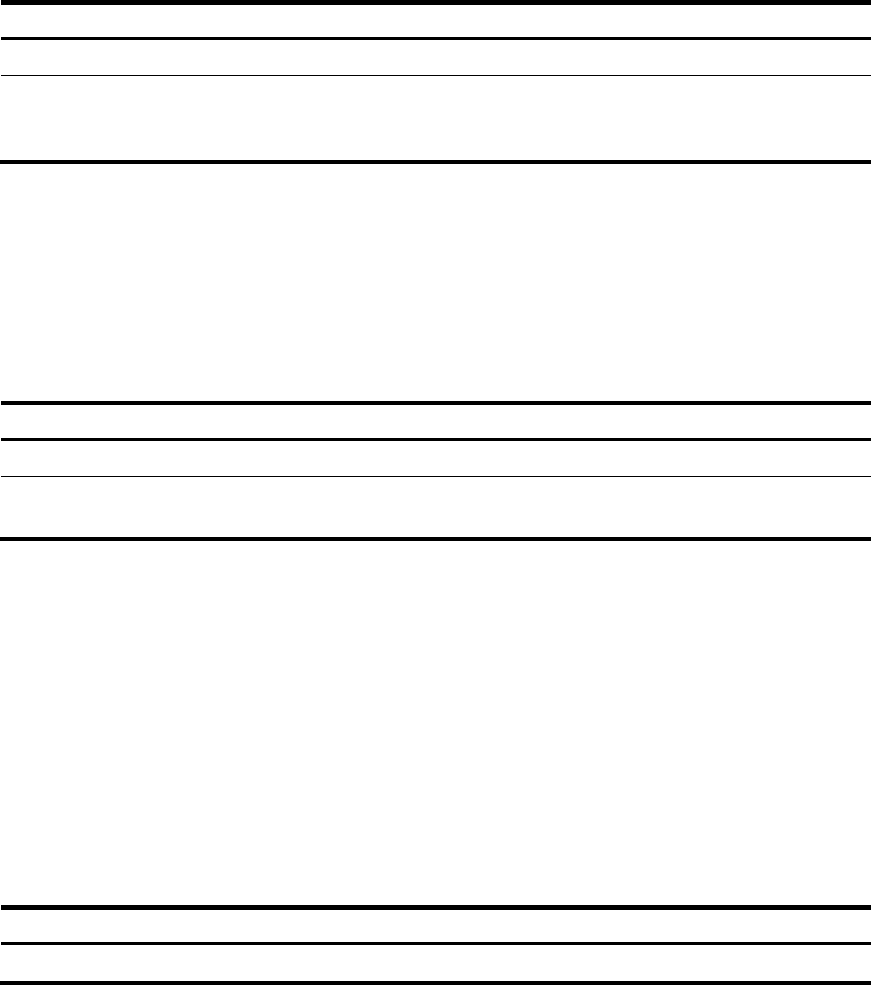
T
o configure an IPv6 multicast routing policy:
Ste
p
Command
Remarks
1. Enter system view.
system-view N/A
2. Configure the device to select
the RPF route based on the
longest prefix match.
ipv6 multicast longest-match
By default, the route with the
highest priority is selected as the
RPF route.
Configuring IPv6 multicast load splitting
By configuring per-source or per-source-and-group load splitting, you can optimize the traffic delivery
when multiple IPv6 multicast data streams are handled.
To configure IPv6 multicast load splitting:
Ste
p
Command
Remarks
1. Enter system view.
system-view N/A
2. Configure IPv6 multicast load
splitting.
ipv6 multicast load-splitting
{source | source-group }
By default, IPv6 multicast load
splitting is disabled.
Configuring an IPv6 multicast forwarding boundary
IPv6 multicast packets do not travel infinitely in a network. The IPv6 multicast data of each IPv6 multicast
group must be transmitted within a definite scope. A multicast forwarding boundary sets the boundary
condition for the IPv6 multicast groups in the specified range or scope. If the destination address of an
IPv6 multicast packet matches the set boundary condition, the packet is not forwarded. Once an IPv6
multicast boundary is configured on an interface, this interface can no longer forward IPv6 multicast
packets (including those sent from the local device) or receive IPv6 multicast packets.
To configure an IPv6 multicast forwarding boundary:
Ste
p
Command
Remarks
1. Enter system view.
system-view N/A