
R21xx-HP FlexFabric 11900 IP Multicast Configuration Guide
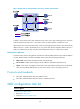
Table Of Contents
- Title Page
- Contents
- Multicast overview
- Configuring IGMP snooping
- Overview
- IGMP snooping configuration task list
- Configuring basic IGMP snooping functions
- Configuring IGMP snooping port functions
- Configuring IGMP snooping policies
- Displaying and maintaining IGMP snooping
- IGMP snooping configuration examples
- Troubleshooting IGMP snooping
- Configuring multicast routing and forwarding
- Configuring IGMP
- Configuring PIM
- Overview
- Configuring PIM-DM
- Configuring PIM-SM
- Configuring common PIM features
- Displaying and maintaining PIM
- PIM configuration examples
- Troubleshooting PIM
- Configuring MLD snooping
- Overview
- MLD snooping configuration task list
- Configuring basic MLD snooping functions
- Configuring MLD snooping port functions
- Configuring MLD snooping policies
- Displaying and maintaining MLD snooping
- MLD snooping configuration examples
- Troubleshooting MLD snooping
- Configuring IPv6 multicast routing and forwarding
- Configuring MLD
- Configuring IPv6 PIM
- PIM overview
- Configuring IPv6 PIM-DM
- Configuring IPv6 PIM-SM
- Configuring common IPv6 PIM features
- Displaying and maintaining IPv6 PIM
- IPv6 PIM configuration examples
- Troubleshooting IPv6 PIM
- Support and other resources
- Index
138
6. When the IPv6 multicast data addressed to G1 or G2 reaches an MLD router, the router forwards
the IPv6 multicast data to the local subnet according to the (*, G1) and (*, G2) multicast
forwarding entries, and then the receivers on the subnet receive the data.
Leaving an IPv6 multicast group
When a host leaves a multicast group, the following process occurs:
1. The host sends an MLD done message to all IPv6 multicast routers on the local subnet. The
destination address is FF02::2.
2. After receiving the MLD done message, the querier sends a configurable number of
multicast-address-specific queries to the group that the host is leaving. The IPv6 multicast addresses
queried include both the destination address field and the group address field of the message.
3. One of the remaining members (if any on the subnet) of the group sends a report within the time
of the maximum response delay advertised in the query messages.
4. If the querier receives a report for the group within the maximum response delay time, it maintains
the memberships of the IPv6 multicast group. Otherwise, the querier assumes that no hosts on the
subnet are interested in IPv6 multicast traffic addressed to that group and stops maintaining the
memberships of the group.
MLDv2 enhancements
MLDv2 is based on and backwards-compatible with MLDv1. MLDv2 provides hosts with enhanced
control capabilities and enhances the MLD state.
Enhancements in control capability of hosts
MLDv2 has introduced IPv6 multicast source filtering modes (Include and Exclude). These modes allow
a host to join a designated IPv6 multicast group and to choose whether to receive or reject multicast data
from designated IPv6 multicast sources. When a host joins an IPv6 multicast group, one of the following
occurs:
• If the host expects IPv6 multicast data from specific IPv6 multicast sources like S1, S2, …, it sends a
report with Filter-Mode denoted as "Include Sources (S1, S2, …)."
• If the host does not expect IPv6 multicast data from specific IPv6 multicast sources like S1, S2, …,
it sends a report with Filter-Mode denoted as "Exclude Sources (S1, S2, …)."
As shown in Figure 43,
the network comprises two IPv6 multicast sources, Source 1 (S1) and Source 2
(S2), both of which can send IPv6 multicast data to IPv6 multicast group G. Host B is interested only in
the IPv6 multicast data that Source 1 sends to G but not in the data from Source 2.