
R21xx-HP FlexFabric 11900 IP Multicast Configuration Guide
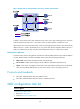
Table Of Contents
- Title Page
- Contents
- Multicast overview
- Configuring IGMP snooping
- Overview
- IGMP snooping configuration task list
- Configuring basic IGMP snooping functions
- Configuring IGMP snooping port functions
- Configuring IGMP snooping policies
- Displaying and maintaining IGMP snooping
- IGMP snooping configuration examples
- Troubleshooting IGMP snooping
- Configuring multicast routing and forwarding
- Configuring IGMP
- Configuring PIM
- Overview
- Configuring PIM-DM
- Configuring PIM-SM
- Configuring common PIM features
- Displaying and maintaining PIM
- PIM configuration examples
- Troubleshooting PIM
- Configuring MLD snooping
- Overview
- MLD snooping configuration task list
- Configuring basic MLD snooping functions
- Configuring MLD snooping port functions
- Configuring MLD snooping policies
- Displaying and maintaining MLD snooping
- MLD snooping configuration examples
- Troubleshooting MLD snooping
- Configuring IPv6 multicast routing and forwarding
- Configuring MLD
- Configuring IPv6 PIM
- PIM overview
- Configuring IPv6 PIM-DM
- Configuring IPv6 PIM-SM
- Configuring common IPv6 PIM features
- Displaying and maintaining IPv6 PIM
- IPv6 PIM configuration examples
- Troubleshooting IPv6 PIM
- Support and other resources
- Index

139
Figure 43 Flow paths of multicast-address-and-source-specific multicast traffic
In MLDv1, Host B cannot select IPv6 multicast sources when it joins IPv6 multicast group G, and IPv6
multicast streams from both Source 1 and Source 2 flow to Host B whether it needs them or not.
When MLDv2 runs on the hosts and routers, Host B can explicitly express its interest in the IPv6 multicast
data that Source 1 sends to G (denoted as (S1, G)), rather than the IPv6 multicast data that Source 2
sends to G (denoted as (S2, G)). Only IPv6 multicast data from Source 1 is delivered to Host B.
Enhancement in MLD state
A multicast router that is running MLDv2 maintains the multicast address state for each multicast address
on each attached subnet. The multicast address state consists of the following information:
• Filter mode—Router keeps tracing the Include or Exclude state.
• List of sources—Router keeps tracing the newly added or deleted IPv6 multicast source.
• Timers—Filter timers, including the time that the router waits before switching to the Include mode
after an IPv6 multicast address times out, the source timer for source recording, and so on.
Protocols and standards
• RFC 2710, Multicast Listener Discovery (MLD) for IPv6
• RFC 3810, Multicast Listener Discovery Version 2 (MLDv2) for IPv6
MLD configuration task list
Task at a
g
lance
Configuring basic MLD functions
• (Required.) Enabling MLD
• (Optional.) Specifying the MLD version