
R21xx-HP FlexFabric 11900 IP Multicast Configuration Guide
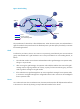

Table Of Contents
- Title Page
- Contents
- Multicast overview
- Configuring IGMP snooping
- Overview
- IGMP snooping configuration task list
- Configuring basic IGMP snooping functions
- Configuring IGMP snooping port functions
- Configuring IGMP snooping policies
- Displaying and maintaining IGMP snooping
- IGMP snooping configuration examples
- Troubleshooting IGMP snooping
- Configuring multicast routing and forwarding
- Configuring IGMP
- Configuring PIM
- Overview
- Configuring PIM-DM
- Configuring PIM-SM
- Configuring common PIM features
- Displaying and maintaining PIM
- PIM configuration examples
- Troubleshooting PIM
- Configuring MLD snooping
- Overview
- MLD snooping configuration task list
- Configuring basic MLD snooping functions
- Configuring MLD snooping port functions
- Configuring MLD snooping policies
- Displaying and maintaining MLD snooping
- MLD snooping configuration examples
- Troubleshooting MLD snooping
- Configuring IPv6 multicast routing and forwarding
- Configuring MLD
- Configuring IPv6 PIM
- PIM overview
- Configuring IPv6 PIM-DM
- Configuring IPv6 PIM-SM
- Configuring common IPv6 PIM features
- Displaying and maintaining IPv6 PIM
- IPv6 PIM configuration examples
- Troubleshooting IPv6 PIM
- Support and other resources
- Index

149
In IPv6 PIM-DM, the multicast forwarding paths for an IPv6 multicast group constitute a source tree, which
is rooted at the IPv6 multicast source and has multicast group members as its "leaves." Because the
source tree consists of the shortest paths from the IPv6 multicast source to the receivers, it is also called
a "shortest path tree (SPT)."
The operating mechanism of IPv6 PIM-DM is summarized as follows:
• Neighbor discovery
• SPT building
• Graft
• Assert
Neighbor discovery
In an IPv6 PIM domain, each interface that runs IPv6 PIM on a router periodically multicasts IPv6 PIM
hello messages to all other IPv6 PIM routers on the local subnet to discover IPv6 PIM neighbors, maintain
IPv6 PIM neighboring relationship with other routers, and build and maintain SPTs.
SPT building
The process of building an SPT is the flood-and-prune process:
1. In an IPv6 PIM-DM domain, when the IPv6 multicast source S sends IPv6 multicast data to the IPv6
multicast group G, the IPv6 multicast data is flooded throughout the domain. A router performs an
RPF check for the IPv6 multicast data. If the check succeeds, the router creates an (S, G) entry and
forwards the data to all downstream nodes in the network. In the flooding process, all the routers
in the IPv6 PIM-DM domain create the (S, G) entry.
2. The nodes without downstream receivers are pruned. A router that has no downstream receivers
sends a prune message to the upstream node to remove the interface that receives the prune
message from the (S, G) entry. In this way, the upstream stream node stops forwarding subsequent
packets addressed to that IPv6 multicast group down to this node.
NOTE:
A
n (S, G) entry contains an IPv6 multicast source address S, an IPv6 multicast group address G, an
outgoing interface list, and an incoming interface.
A prune process is initiated by a leaf router. As shown in Figure 45, the router interface that does not
have any downstream receivers initiates a prune process by sending a prune message toward the IPv6
multicast source. This prune process goes on until only necessary branches are left in the IPv6 PIM-DM
domain, and these necessary branches constitute an SPT.