
R21xx-HP FlexFabric 11900 IP Multicast Configuration Guide

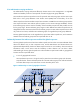
Table Of Contents
- Title Page
- Contents
- Multicast overview
- Configuring IGMP snooping
- Overview
- IGMP snooping configuration task list
- Configuring basic IGMP snooping functions
- Configuring IGMP snooping port functions
- Configuring IGMP snooping policies
- Displaying and maintaining IGMP snooping
- IGMP snooping configuration examples
- Troubleshooting IGMP snooping
- Configuring multicast routing and forwarding
- Configuring IGMP
- Configuring PIM
- Overview
- Configuring PIM-DM
- Configuring PIM-SM
- Configuring common PIM features
- Displaying and maintaining PIM
- PIM configuration examples
- Troubleshooting PIM
- Configuring MLD snooping
- Overview
- MLD snooping configuration task list
- Configuring basic MLD snooping functions
- Configuring MLD snooping port functions
- Configuring MLD snooping policies
- Displaying and maintaining MLD snooping
- MLD snooping configuration examples
- Troubleshooting MLD snooping
- Configuring IPv6 multicast routing and forwarding
- Configuring MLD
- Configuring IPv6 PIM
- PIM overview
- Configuring IPv6 PIM-DM
- Configuring IPv6 PIM-SM
- Configuring common IPv6 PIM features
- Displaying and maintaining IPv6 PIM
- IPv6 PIM configuration examples
- Troubleshooting IPv6 PIM
- Support and other resources
- Index
155
RPT building
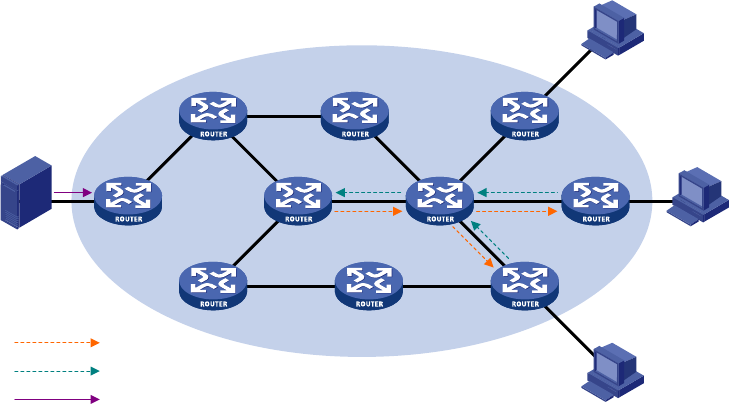
Figure 49 RPT building in an IPv6 PIM-SM domain
As shown in Figure 49, the process of building an RPT is as follows:
1. When a receiver wants to join the IPv6 multicast group G, it uses an MLD message to inform the
receiver-side DR.
2. After getting the receiver information, the DR sends a join message, which is forwarded hop by
hop to the RP that provides services for the IPv6 multicast group.
3. The routers along the path from the DR to the RP form an RPT branch. Each router on this branch
adds to its forwarding table a (*, G) entry, where the asterisk (*) means any IPv6 multicast source.
The RPT is rooted at the RP and has the DR as its leaf.
When the IPv6 multicast data addressed to the IPv6 multicast group G reaches the RP, the RP forwards
the data to the DR along the established RPT, and finally to the receiver.
When a receiver is no longer interested in the IPv6 multicast data addressed to the IPv6 multicast group
G, the receiver-side DR sends a prune message, which goes hop by hop along the RPT to the RP. After
receiving the prune message, the upstream node deletes the interface that connects to this downstream
node from the outgoing interface list and checks whether it has receivers for that IPv6 multicast group. If
not, the router continues to forward the prune message to its upstream router.
IPv6 multicast source registration
The IPv6 multicast source uses the registration process to inform an RP of its presence.
Source
Server
Host A
Host B
Host C
Receiver
Receiver
IPv6 multicast packets
RPT
Join message
RP DR
DR