
R21xx-HP FlexFabric 11900 IP Multicast Configuration Guide
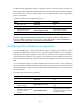
Table Of Contents
- Title Page
- Contents
- Multicast overview
- Configuring IGMP snooping
- Overview
- IGMP snooping configuration task list
- Configuring basic IGMP snooping functions
- Configuring IGMP snooping port functions
- Configuring IGMP snooping policies
- Displaying and maintaining IGMP snooping
- IGMP snooping configuration examples
- Troubleshooting IGMP snooping
- Configuring multicast routing and forwarding
- Configuring IGMP
- Configuring PIM
- Overview
- Configuring PIM-DM
- Configuring PIM-SM
- Configuring common PIM features
- Displaying and maintaining PIM
- PIM configuration examples
- Troubleshooting PIM
- Configuring MLD snooping
- Overview
- MLD snooping configuration task list
- Configuring basic MLD snooping functions
- Configuring MLD snooping port functions
- Configuring MLD snooping policies
- Displaying and maintaining MLD snooping
- MLD snooping configuration examples
- Troubleshooting MLD snooping
- Configuring IPv6 multicast routing and forwarding
- Configuring MLD
- Configuring IPv6 PIM
- PIM overview
- Configuring IPv6 PIM-DM
- Configuring IPv6 PIM-SM
- Configuring common IPv6 PIM features
- Displaying and maintaining IPv6 PIM
- IPv6 PIM configuration examples
- Troubleshooting IPv6 PIM
- Support and other resources
- Index
166
When you configure a C-BSR, reserve a relatively large bandwidth between the C-BSR and the other
devices in the IPv6 PIM-SM domain.
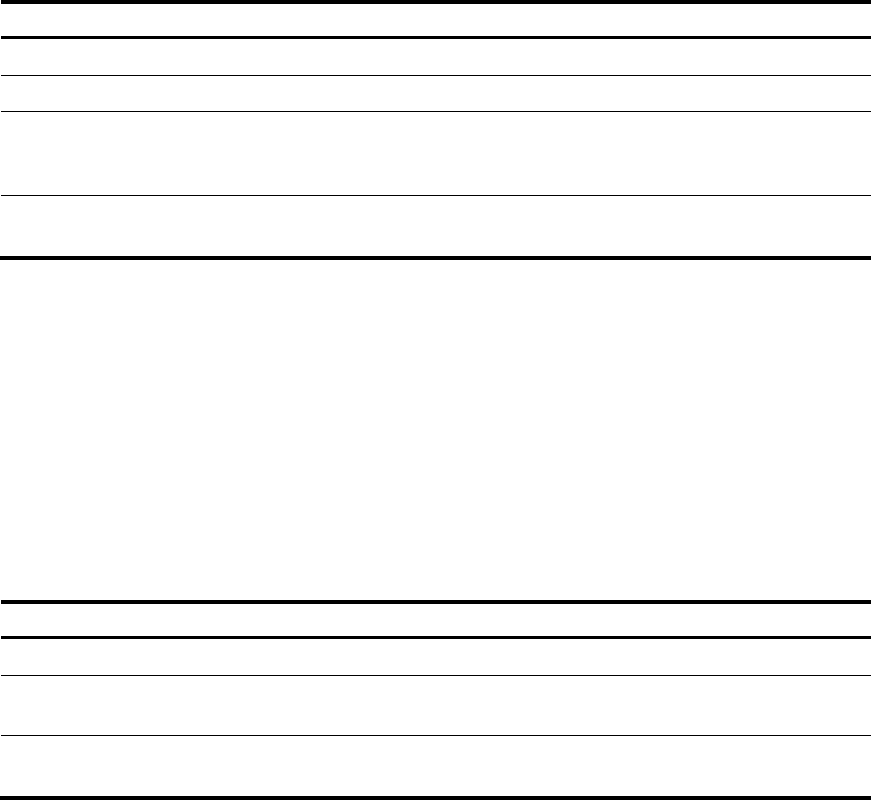
To configure a C-BSR:
Ste
p
Command
Remarks
1. Enter system view.
system-view
N/A
2. Enter IPv6 PIM view.
ipv6 pim N/A
3. Configure a C-BSR.
c-bsr ipv6-address [ scope
scope-id ] [ hash-length
hash-length | priority priority ] *
By default, no C-BSR is configured.
4. (Optional.) Configure a legal
BSR address range.
bsr-policy acl6-number
By default, no restrictions are
defined.
Configuring an IPv6 PIM domain border
As the administrative core of an IPv6 PIM-SM domain, the BSR sends the collected RP-set information in
the form of bootstrap messages to all routers in the IPv6 PIM-SM domain.
An IPv6 PIM domain border is a bootstrap message boundary. Each BSR has its specific service scope.
IPv6 PIM domain border interfaces partition a network into different IPv6 PIM-SM domains. Bootstrap
messages cannot cross a domain border in either direction.
Perform the following configuration on routers that you want to configure as an IPv6 PIM domain border.
To configure an IPv6 PIM border domain:
Ste
p
Command Remarks
1. Enter system view.
system-view
N/A
2. Enter interface view.
interface interface-type
interface-number
N/A
3. Configuring an IPv6 PIM
domain border.
ipv6 pim bsr-boundary
By default, no IPv6 PIM domain
border is configured.
Disabling the BSM semantic fragmentation function
Generally, a BSR periodically advertises the RP-set information in BSMs within the IPv6 PIM-SM domain.
It encapsulates a BSM in an IPv6 datagram and might fragment the datagram if the message exceeds
the MTU. In this case, loss of a single IP fragment leads to unavailability of the entire message.
Semantic fragmentation of BSMs can solve this issue. When a BSM exceeds the MTU, it is split to multiple
BSM fragments (BSMFs).
• If the RP-set information for an IPv6 multicast group range is carried in one BSMF, a non-BSR router
directly updates the RP-set information for the group range after receiving the BSMF.
• If the RP-set information for an IPv6 multicast group range is carried in multiple BSMFs, a non-BSR
router updates the RP-set information for the group range after receiving all these BSMFs. Because
the RP-set information contained in each segment is different, loss of some IP fragments does not
result in dropping of the entire BSM.