
R21xx-HP FlexFabric 11900 IP Multicast Configuration Guide
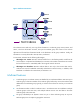

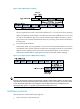
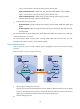
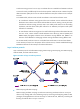
Table Of Contents
- Title Page
- Contents
- Multicast overview
- Configuring IGMP snooping
- Overview
- IGMP snooping configuration task list
- Configuring basic IGMP snooping functions
- Configuring IGMP snooping port functions
- Configuring IGMP snooping policies
- Displaying and maintaining IGMP snooping
- IGMP snooping configuration examples
- Troubleshooting IGMP snooping
- Configuring multicast routing and forwarding
- Configuring IGMP
- Configuring PIM
- Overview
- Configuring PIM-DM
- Configuring PIM-SM
- Configuring common PIM features
- Displaying and maintaining PIM
- PIM configuration examples
- Troubleshooting PIM
- Configuring MLD snooping
- Overview
- MLD snooping configuration task list
- Configuring basic MLD snooping functions
- Configuring MLD snooping port functions
- Configuring MLD snooping policies
- Displaying and maintaining MLD snooping
- MLD snooping configuration examples
- Troubleshooting MLD snooping
- Configuring IPv6 multicast routing and forwarding
- Configuring MLD
- Configuring IPv6 PIM
- PIM overview
- Configuring IPv6 PIM-DM
- Configuring IPv6 PIM-SM
- Configuring common IPv6 PIM features
- Displaying and maintaining IPv6 PIM
- IPv6 PIM configuration examples
- Troubleshooting IPv6 PIM
- Support and other resources
- Index
12
• PIM snooping and IPv6 PIM snooping:
PIM snooping and IPv6 PIM snooping run on Layer 2 devices. They determine which ports are
interested in multicast data by analyzing the received IPv6 PIM messages, and add the ports to a
multicast forwarding entry to make sure multicast data can be forwarded to only the ports that are
interested in the data.
• Multicast VLAN and IPv6 multicast VLAN:
In the traditional multicast-on-demand mode, when users in different VLANs on a Layer 2 device
need multicast information, the upstream Layer 3 device must forward a separate copy of the
multicast data to each VLAN of the Layer 2 device. When the multicast VLAN or IPv6 multicast
VLAN feature is enabled on the Layer 2 device, the Layer 3 multicast device sends only one copy
of multicast to the multicast VLAN or IPv6 multicast VLAN on the Layer 2 device. This method
avoids waste of network bandwidth and extra burden on the Layer 3 device.
Multicast packet forwarding mechanism
In a multicast model, a multicast source sends information to the host group identified by the multicast
group address in the destination address field of IP multicast packets. To deliver multicast packets to
receivers located at different positions of the network, multicast routers on the forwarding paths usually
need to forward multicast packets that an incoming interface receives to multiple outgoing interfaces.
Compared to a unicast model, a multicast model is more complex in the following aspects:
• To ensure multicast packet transmission in the network, unicast routing tables, routing tables for
multicast (for example, the MBGP routing table), and static multicast routes must be used as
guidance for multicast forwarding.
• To process the same multicast information from different peers received on different interfaces of the
same device, every multicast packet undergoes a reverse path forwarding (RPF) check on the
incoming interface. The RPF check result determines whether the packet will be forwarded or
discarded. The RPF check mechanism is the basis for most multicast routing protocols to implement
multicast forwarding.
For more information about the RPF mechanism, see "Configuring multicast routing and
forwarding" and "Configuring IPv6 multicast routing and forwarding."