
R21xx-HP FlexFabric 11900 IP Multicast Configuration Guide
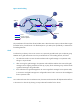
Table Of Contents
- Title Page
- Contents
- Multicast overview
- Configuring IGMP snooping
- Overview
- IGMP snooping configuration task list
- Configuring basic IGMP snooping functions
- Configuring IGMP snooping port functions
- Configuring IGMP snooping policies
- Displaying and maintaining IGMP snooping
- IGMP snooping configuration examples
- Troubleshooting IGMP snooping
- Configuring multicast routing and forwarding
- Configuring IGMP
- Configuring PIM
- Overview
- Configuring PIM-DM
- Configuring PIM-SM
- Configuring common PIM features
- Displaying and maintaining PIM
- PIM configuration examples
- Troubleshooting PIM
- Configuring MLD snooping
- Overview
- MLD snooping configuration task list
- Configuring basic MLD snooping functions
- Configuring MLD snooping port functions
- Configuring MLD snooping policies
- Displaying and maintaining MLD snooping
- MLD snooping configuration examples
- Troubleshooting MLD snooping
- Configuring IPv6 multicast routing and forwarding
- Configuring MLD
- Configuring IPv6 PIM
- PIM overview
- Configuring IPv6 PIM-DM
- Configuring IPv6 PIM-SM
- Configuring common IPv6 PIM features
- Displaying and maintaining IPv6 PIM
- IPv6 PIM configuration examples
- Troubleshooting IPv6 PIM
- Support and other resources
- Index

64
Configuring PIM
Overview
Protocol Independent Multicast (PIM) provides IP multicast forwarding by leveraging unicast static routes
or unicast routing tables generated by a unicast routing protocol, such as RIP, OSPF, IS-IS, or BGP. PIM
is not dependent on any particular unicast routing protocol, and it uses the underlying unicast routing to
generate a routing table with routes.
PIM uses the RPF mechanism to implement multicast forwarding. When a multicast packet arrives on an
interface of the device, it undergoes an RPF check. If the RPF check succeeds, the device creates a
multicast routing entry and forwards the packet. If the RPF check fails, the device discards the packet. For
more information about RPF, see "Configuring multicast routing and forwarding."
Ba
sed on the implementation mechanism, PIM includes the following categories:
• Protocol Independent Multicast–Dense Mode (PIM-DM)
• Protocol Independent Multicast–Sparse Mode (PIM-SM)
In this document, a PIM domain refers to a network composed of PIM routers.
The term "interface" in the PIM features collectively refers to Layer 3 interfaces, including VLAN interfaces
and Layer 3 Ethernet interfaces. You can set an Ethernet port as a Layer 3 interface by using the port
link-mode route command (see Layer 2—LAN Switching Configuration Guide).
PIM-DM overview
PIM-DM uses the push mode for multicast forwarding, and is suitable for small-sized networks with
densely distributed multicast members.
The following describes the basic implementation of PIM-DM:
• PIM-DM assumes that all downstream nodes want to receive multicast data when a source starts
sending, so multicast data is flooded to all downstream nodes on the network.
• Branches without downstream receivers are pruned from the forwarding trees, leaving only those
branches that contain receivers.
• The pruned state of a branch has a finite holdtime timer. When the timer expires, multicast data is
again forwarded to the pruned branch. This flood-and-prune cycle takes place periodically to
maintain the forwarding branches.
• To reduce join latency when a new receiver on a previously pruned branch joins a multicast group,
PIM-DM uses a graft mechanism to turn the pruned branch into a forwarding branch.