
R21xx-HP FlexFabric 11900 IP Multicast Configuration Guide
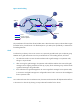
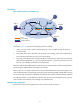
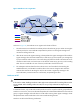
Table Of Contents
- Title Page
- Contents
- Multicast overview
- Configuring IGMP snooping
- Overview
- IGMP snooping configuration task list
- Configuring basic IGMP snooping functions
- Configuring IGMP snooping port functions
- Configuring IGMP snooping policies
- Displaying and maintaining IGMP snooping
- IGMP snooping configuration examples
- Troubleshooting IGMP snooping
- Configuring multicast routing and forwarding
- Configuring IGMP
- Configuring PIM
- Overview
- Configuring PIM-DM
- Configuring PIM-SM
- Configuring common PIM features
- Displaying and maintaining PIM
- PIM configuration examples
- Troubleshooting PIM
- Configuring MLD snooping
- Overview
- MLD snooping configuration task list
- Configuring basic MLD snooping functions
- Configuring MLD snooping port functions
- Configuring MLD snooping policies
- Displaying and maintaining MLD snooping
- MLD snooping configuration examples
- Troubleshooting MLD snooping
- Configuring IPv6 multicast routing and forwarding
- Configuring MLD
- Configuring IPv6 PIM
- PIM overview
- Configuring IPv6 PIM-DM
- Configuring IPv6 PIM-SM
- Configuring common IPv6 PIM features
- Displaying and maintaining IPv6 PIM
- IPv6 PIM configuration examples
- Troubleshooting IPv6 PIM
- Support and other resources
- Index

68
• When a receiver expresses it interest in the multicast data addressed to a specific multicast group,
the receiver-side designated router (DR) sends a join message to the RP for the multicast group. The
path along which the message goes hop by hop to the RP forms a branch of the RPT.
• When a multicast source sends multicast data to a multicast group, the source-side DR must register
the multicast source with the RP by unicasting register messages to the RP. The multicast source stops
sending until it receives a register-stop message from the RP. When the RP receives the register
message, it triggers the establishment of an SPT. Then, the multicast source sends subsequent
multicast packets along the SPT to the RP. After reaching the RP, the multicast packet is duplicated
and delivered to the receivers along the RPT.
Multicast data is replicated wherever the RPT branches, and this process automatically repeats until the
multicast data reaches the receivers.
The operating mechanism of PIM-SM is summarized as follows:
• Neighbor discovery
• DR election
• RP discovery
• RPT building
• Multicast source registration
• Switchover to SPT
• Assert
Neighbor discovery
PIM-SM uses a similar neighbor discovery mechanism as PIM-DM does. For more information, see
"Neighbor discovery."
DR election
On a shared-media LAN like Ethernet, only a DR forwards the multicast data. A DR is required in both
the source-side network and receiver-side network. A source-side DR acts on behalf of the multicast
source to send register messages to the RP, and the receiver-side DR acts on behalf of the receiver hosts
to send join messages to the RP.
PIM-DM does not require a DR. However, if IGMPv1 runs on any shared-media LAN in a PIM-DM domain,
a DR must be elected to act as the IGMPv1 querier for the LAN. For more information about IGMP, see
"Configuring IGMP."
IMPORTANT:
IGMP must be enabled on the device that acts as the receiver-side DR. Otherwise, the receiver hosts
attached to the DR cannot join any multicast groups.