
R21xx-HP FlexFabric 11900 IP Multicast Configuration Guide
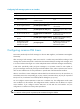
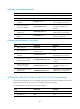

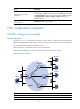
Table Of Contents
- Title Page
- Contents
- Multicast overview
- Configuring IGMP snooping
- Overview
- IGMP snooping configuration task list
- Configuring basic IGMP snooping functions
- Configuring IGMP snooping port functions
- Configuring IGMP snooping policies
- Displaying and maintaining IGMP snooping
- IGMP snooping configuration examples
- Troubleshooting IGMP snooping
- Configuring multicast routing and forwarding
- Configuring IGMP
- Configuring PIM
- Overview
- Configuring PIM-DM
- Configuring PIM-SM
- Configuring common PIM features
- Displaying and maintaining PIM
- PIM configuration examples
- Troubleshooting PIM
- Configuring MLD snooping
- Overview
- MLD snooping configuration task list
- Configuring basic MLD snooping functions
- Configuring MLD snooping port functions
- Configuring MLD snooping policies
- Displaying and maintaining MLD snooping
- MLD snooping configuration examples
- Troubleshooting MLD snooping
- Configuring IPv6 multicast routing and forwarding
- Configuring MLD
- Configuring IPv6 PIM
- PIM overview
- Configuring IPv6 PIM-DM
- Configuring IPv6 PIM-SM
- Configuring common IPv6 PIM features
- Displaying and maintaining IPv6 PIM
- IPv6 PIM configuration examples
- Troubleshooting IPv6 PIM
- Support and other resources
- Index

83
Ste
p
Command
Remarks
2. Enter PIM view.
pim N/A
3. Disable the BSM semantic
fragmentation function.
undo bsm-fragment enable
By default, BSM semantic
fragmentation is enabled.
NOTE:
Generally, a BSR performs BSM semantic fragmentation according to the MTU of its BSR interface.
However, for BSMs originated due to learning of a new PIM neighbor, semantic fragmentation is
performed according to the MTU of the interface that sends the BSMs.
Configuring multicast source registration
In a PIM-SM domain, the source-side DR sends register messages to the RP, and these register messages
have different multicast source or group addresses. You can configure a filtering rule to filter register
messages so that the RP can provide services for specific multicast groups. If the filtering rule denies an
(S, G) entry, or if the filtering rule does not define the action for this entry, the RP sends a register-stop
message to the DR to stop the registration process for the multicast data.
In view of information integrity of a register message in the transmission process, you can configure the
device to calculate the checksum based on the entire register message. However, to reduce the workload
of encapsulating data in register messages and for the sake of interoperability, do not use this checksum
calculation method.
To configure multicast source registration:
Ste
p
Command Remarks
1. Enter system view.
system-view N/A
2. Enter PIM view.
pim N/A
3. Configure a filtering rule for
register messages.
register-policy acl-number
By default, no register filtering rule
exists.
4. Configure the device to
calculate the checksum based
on the entire register
message.
register-whole-checksum
By default, the device calculates
the checksum based on the header
of a register message.
Configuring switchover to SPT
CAUTION:
If the device is an RP, disablin
g
switchover to SPT mi
g
ht cause multicast traffic forwardin
g
failures on the
source-side DR. When disabling switchover to SPT, be sure you fully understand its impact on your
network.
To configure the criteria for triggering a switchover to SPT: