
R21xx-HP FlexFabric 11900 IRF Configuration Guide

8
If the IRF fabric in Recovery state fails before the failure is recovered, repair the failed IRF fabric and the
failed IRF link.
If the IRF fabric in Active state fails before the failure is recovered, first enable the IRF fabric in Recovery
state to take over the active IRF fabric and protect services from being affected. After that, recover the
MAD failure.
LACP MAD
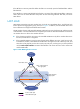
LACP MAD requires that every IRF member have a link with an intermediate device, and all these links
form a dynamic link aggregation group, as shown in Figure 6. In additi
on, the intermediate device must
be an HP device that supports extended LACP for MAD.
The IRF member devices send extended LACPDUs with TLVs that convey the domain ID and the active ID
of the IRF fabric. The intermediate device transparently forwards the extended LACPDUs received from
one member device to all the other member devices:
• If the domain IDs and the active IDs in the extended LACPDUs sent by all the member devices are
the same, the IRF fabric is integrated.
• If the extended LACPDUs convey the same domain ID but different active IDs, a split has occurred.
To handle this situation, LACP MAD sets the IRF fabric with higher active ID in Recovery state, and
shuts down all its physical ports but the console ports, IRF ports, and any ports you have specified
with the mad exclude interface command. The IRF fabric with lower active ID is still in Active state
and forwards traffic.
Figure 6 LACP MAD application scenario
Intermediate device
Master
IRF
Internet
Customer
premise
network
IRF link
Common traffic path
LACP MAD traffic path
LACP-enabled dynamic
link aggregation
Subordinate
LACP-enabled dynamic
link aggregation