
R21xx-HP FlexFabric 11900 Layer 3 IP Routing Command Reference
304
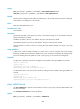
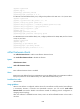
<Sysname> system-view
[Sysname] bgp 100
[Sysname-bgp] ipv4-family unicast
[Sysname-bgp-ipv4] preference 20 20 200
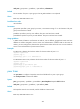
# In BGP IPv4 unicast address family view, configure the preference for BGP route 1.1.1.0/24 as 200.
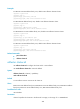
<Sysname> system-view
[Sysname] ip prefix-list route permit 1.1.1.0 24
[Sysname] route-policy prefer permit node 0
[Sysname-route-policy-prefer-0] if-match ip address prefix-list route
[Sysname-route-policy-prefer-0] apply preference 200
[Sysname-route-policy-prefer-0] quit
[Sysname] bgp 100
[Sysname-bgp] ipv4-family unicast
[Sysname-bgp-ipv4] preference route-policy prefer
# In BGP-VPN IPv6 unicast address family view, configure preferences for EBGP, IBGP, and local routes
as 20, 20, and 200.
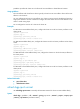
<Sysname> system-view
[Sysname] bgp 100
[Sysname-bgp] ip vpn-instance vpn1
[Sysname-bgp-vpn1] ipv6-family unicast
[Sysname-bgp-ipv6-vpn1] preference 20 20 200
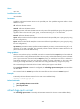
reflect between-clients
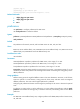
Use reflect between-clients to enable route reflection between clients.
Use undo reflect between-clients to disable this function.
Syntax
reflect between-clients
undo reflect between-clients
Default
Route reflection between clients is enabled.
Views
BGP IPv4 unicast address family view, BGP-VPN IPv4 unicast address family view, BGP VPNv4 address
family view, BGP IPv6 unicast address family view, BGP VPNv6 address family view
Predefined user roles
network-admin
Usage guidelines
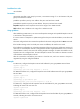
When a route reflector is configured, and the clients of a route reflector are fully meshed, route reflection
is unnecessary because it consumes more bandwidth resources. You can use the undo reflect
between-clients command to disable route reflection instead of modifying network configuration or
changing network topology.
After route reflection is disabled between clients, routes can still be reflected between a client and a
non-client.