
R21xx-HP FlexFabric 11900 Layer 3 IP Routing Configuration Guide



171
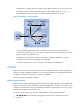
BGP route dampening uses a penalty value to judge the stability of a route. The bigger the value,
the less stable the route. Each time a route state change (from reachable to unreachable) occurs,
or a reachable route's attribute changes, BGP adds a penalty value (1000, which is a fixed
number and cannot be changed) to the route. When the penalty value of the route exceeds the
suppress value, the route is suppressed and cannot become the optimal route. When the penalty
value reaches the upper limit, no penalty value is added.
If the suppressed route does not flap, its penalty value gradually decreases to half of the suppress
value after a period of time. This period is called "Half-life." When the value decreases to the
reusable threshold value, the route is usable again.
Figure 49 BGP route dampening
• Peer group
You can organize BGP peers with the same attributes into a group to simplify their configurations.
When a peer joins the peer group, the peer obtains the same configuration as the peer group. If
the configuration of the peer group is changed, the configuration of group members is changed.
• Community
You can apply a community list or an extended community list to a routing policy for route control.
For more information, see "BGP path attributes."
• Route reflector
IBGP peers must be fully meshed to maintain connectivity. If n routers exist in an AS, the number of
IBGP connections is n(n-1)/2. If a large number of IBGP peers exist, large amounts of network and
CPU resources are consumed to maintain sessions.
Using route reflectors can solve this issue. In an AS, a router acts as a route reflector, and other
routers act as clients connecting to the route reflector. The route reflector forwards routing
information received from a client to other clients. In this way, all clients can receive routing
information from one another without establishing BGP sessions.
Suppress
threshold
Reusable
threshold
Penalty
value
Time
Half-life
Suppress time