
R21xx-HP FlexFabric 11900 Layer 3 IP Services Configuration Guide





137
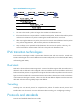
The device uniquely identifies a static neighbor entry by the IPv6 address and the local Layer 3 interface
number of the neighbor. You can configure a static neighbor entry by using one of the following
methods:
• Method 1—Associate a neighbor's IPv6 address and link-layer address with the local Layer 3
interface.
If you use Method 1, the device automatically finds the Layer 2 port connected to the neighbor.
• Method 2—Associate a neighbor's IPv6 address and link-layer address with a local port in a
VLAN.
If you use Method 2, make sure the corresponding VLAN interface exists and the Layer 2 port
specified by port-type port-number belongs to the VLAN specified by vlan-id. The device associates
the VLAN interface with the neighbor IPv6 address to identify the static neighbor entry.
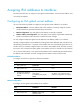
To configure a static neighbor entry:
Ste
p
Command
Remarks
1. Enter system view.
system-view N/A
2. Configure a static
neighbor entry.
ipv6 neighbor ipv6-address mac-address { vlan-id
port-type port-number | interface interface-type
interface-number } [ vpn-instance
vpn-instance-name ]
By default, no static neighbor
entry exists on the device.
Setting the maximum number of dynamic neighbor entries
The device can dynamically acquire the link-layer address of a neighboring node through NS and NA
messages and add it into the neighbor table. When the number of dynamic neighbor entries reaches the
threshold, the interface stops learning neighbor information. To prevent an interface from occupying too
many neighbor table resources, you can set the maximum number of dynamic neighbors that an
interface can learn.
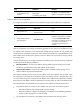
To set the maximum number of dynamic neighbor entries:
Ste
p
Command
Remarks
1. Enter system view.
system-view N/A
2. Enter interface view.
interface interface-type
interface-number
N/A
3. Set the maximum number of
dynamic neighbor entries that
the interface can learn.
ipv6 neighbors
max-learning-num number
By default, an interface can learn a
maximum of 8192 dynamic
neighbor entries.
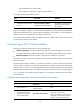
Setting the aging timer for ND entries in stale state
ND entries in stale state have an aging timer. If an ND entry in stale state is not refreshed before the timer
expires, the ND entry changes to the delay state. If it is still not refreshed in 5 seconds, the ND entry