
R21xx-HP FlexFabric 11900 Layer 3 IP Services Configuration Guide





153
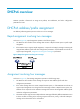
lifetime elapses). The DHCPv6 server responds with a Reply message, informing the client about whether
or not the lease is renewed.
If the DHCPv6 client receives no response from any DHCPv6 server before the valid lifetime expires, the
client stops using the address/prefix.
For more information about the valid lifetime and the preferred lifetime, see "Configuring basic IPv6
set
tings."
Stateless DHCPv6
Stateless DHCPv6 enables a device that has obtained an IPv6 address/prefix to get other configuration
parameters from a DHCPv6 server.
The device decides whether to perform stateless DHCP according to the managed address configuration
flag (M flag) and the other stateful configuration flag (O flag) in the RA message received from the router
during stateless address autoconfiguration. If the M flag is set to 0 and the O flag is set to 1, the device
performs stateless DHCP to get other configuration parameters.
For more information about stateless address autoconfiguration, see "Configuring basic IPv6 settings."
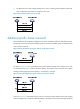
Figure 62 Stateless DHCPv6 operation
As shown in Figure 62, stateless DHCPv6 operates in the following steps:
1. The DHCPv6 client sends an Information-request message to the multicast address of all DHCPv6
servers and DHCPv6 relay agents. The Information-request message contains an Option Request
option that specifies the requested configuration parameters.
2. The DHCPv6 server returns to the client a Reply message containing the requested configuration
parameters.
3. The client checks the Reply message. If the obtained configuration parameters match those
requested in the Information-request message, the client uses these parameters to complete
configuration. If not, the client ignores the configuration parameters. If the client receives multiple
replies, it uses the first received reply.
Protocols and standards
• RFC 3736, Stateless Dynamic Host Configuration Protocol (DHCP) Service for IPv6