
R21xx-HP FlexFabric 11900 Layer 3 IP Services Configuration Guide





174
• IPv6 over IPv4 manual tunneling—A point-to-point link and its source and destination IPv4
addresses are manually configured. You can establish an IPv6 over IPv4 manual tunnel to connect
isolated IPv6 networks over an IPv4 network, or connect an IPv6 network to an IPv4/IPv6 dual-stack
host over an IPv4 network.
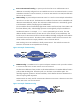
• 6to4 tunneling—A point-to-multipoint automatic tunnel. It is used to connect multiple isolated IPv6
networks over an IPv4 network. The destination IPv4 address of a 6to4 tunnel is embedded in the
destination 6to4 address of packets. This mechanism enables the device to automatically get the
tunnel destination address, simplifying tunnel establishment.
The 6to4 address format is 2002:abcd:efgh:subnet number::interface ID/48, where 2002 is the
fixed IPv6 address prefix, and abcd:efgh represents a 32-bit globally unique IPv4 address in
hexadecimal notation. For example, 1.1.1.1 can be represented by 0101:0101. The IPv4
address identifies a 6to4 network (an IPv6 network where all hosts use 6to4 addresses). The
border router of a 6to4 network must have the IPv4 address abcd:efgh configured on the interface
connected to the IPv4 network. The subnet number identifies a subnet in the 6to4 network. The
subnet number::interface ID uniquely identifies a host in the 6to4 network.
6to4 tunneling uses an IPv4 address to identify a 6to4 network. This method overcomes the
limitations of automatic IPv4-compatible IPv6 tunneling.
Figure 72 Principle of 6to4 tunneling
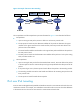
• ISATAP tunneling—An ISATAP tunnel is a point-to-multipoint automatic tunnel. It provides a solution
to connect an IPv6 host to an IPv6 network over an IPv4 network.
The destination addresses of IPv6 packets are all ISATAP addresses. The ISATAP address format is
prefix:0:5EFE:abcd:efgh/64. The 64-bit prefix is a valid IPv6 unicast address prefix. The
abcd:efgh segments represent a 32-bit IPv4 address, which identifies the tunnel destination but
does not require global uniqueness.
ISATAP tunnels are mainly used for communication between IPv6 routers or between an IPv6 host
and an IPv6 router over an IPv4 network.
Figure 73 Principle of ISATAP tunneling