
R21xx-HP FlexFabric 11900 Layer 3 IP Services Configuration Guide



29
• file—Boot file (also called system software image) name and path information, defined by the
server to the client.
• options—Optional parameters field that is variable in length, which includes the message type,
lease duration, subnet mask, domain name server IP address, and WINS IP address.
DHCP options
DHCP uses the same message format as BOOTP, but DHCP uses the options field to carry information for
dynamic address allocation and provide additional configuration information to clients.
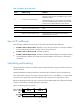
Figure 14 DHCP option format
Common DHCP options
The following are common DHCP options:
• Option 3—Router option. It specifies the gateway address.
• Option 6—DNS server option. It specifies the DNS server's IP address.
• Option 33—Static route option. It specifies a list of classful static routes (the destination network
addresses in these static routes are classful) that a client should add into its routing table. If both
Option 33 and Option 121 exist, Option 33 is ignored.
• Option 51—IP address lease option.
• Option 53—DHCP message type option. It identifies the type of the DHCP message.
• Option 55—Parameter request list option. It is used by a DHCP client to request specified
configuration parameters. The option contains values that correspond to the parameters requested
by the client.
• Option 60—Vendor class identifier option. It is used by a DHCP client to identify its vendor, and by
a DHCP server to distinguish DHCP clients by vendor class and assign specific IP addresses to the
DHCP clients.
• Option 66—TFTP server name option. It specifies a TFTP server to be assigned to the client.
• Option 67—Boot file name option. It specifies the boot file name to be assigned to the client.
• Option 121—Classless route option. It specifies a list of classless static routes (the destination
network addresses in these static routes are classless) that the requesting client should add to its
routing table. If both Option 33 and Option 121 exist, Option 33 is ignored.