
R21xx-HP FlexFabric 11900 Layer 3 IP Services Configuration Guide






80
Configuring DNS
Overview
Domain Name System (DNS) is a distributed database used by TCP/IP applications to translate domain
names into IP addresses. With DNS, you can use easy-to-remember domain names in some applications
and let the DNS server translate them into correct IP addresses. The domain name-to-IP address mapping
is called a DNS entry.
DNS services can be static or dynamic. After a user specifies a name, the device checks the local static
name resolution table for an IP address. If no IP address is available, it contacts the DNS server for
dynamic name resolution, which takes more time than static name resolution. To improve efficiency, you
can put frequently queried name-to-IP address mappings in the local static name resolution table.
Static domain name resolution
Static domain name resolution means manually creating mappings between domain names and IP
addresses. IP addresses of the corresponding domain names can be found in the static domain
resolution table when you use applications such as Telnet.
Dynamic domain name resolution
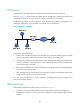
Resolution process
1. A user program sends a name query to the resolver of the DNS client.
2. The DNS resolver looks up the local domain name cache for a match. If the resolver finds a match,
it sends the corresponding IP address back. If not, it sends a query to the DNS server.
3. The DNS server looks up the corresponding IP address of the domain name in its DNS database.
If no match is found, the server sends a query to other DNS servers. This process continues until a
result, whether successful or not, is returned.
4. After receiving a response from the DNS server, the DNS client returns the resolution result to the
user program.