
R21xx-HP FlexFabric 11900 Layer 3 IP Services Configuration Guide






82
DNS proxy
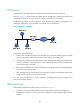
A DNS proxy forwards DNS requests and replies between DNS clients and a DNS server.
As shown in Figure 32, a D
NS client sends a DNS request to the DNS proxy, which forwards the request
to the designated DNS server, and conveys the reply from the DNS server to the client.
The DNS proxy simplifies network management. When the DNS server address is changed, you can
change the configuration on only the DNS proxy instead of on each DNS client.
Figure 32 DNS proxy application
A DNS proxy operates as follows:
1. A DNS client considers the DNS proxy as the DNS server, and sends a DNS request to the DNS
proxy. The destination address of the request is the IP address of the DNS proxy.
2. The DNS proxy searches the local static domain name resolution table and dynamic domain name
resolution cache after receiving the request. If the requested information is found, the DNS proxy
returns a DNS reply to the client.
3. If the requested information is not found, the DNS proxy sends the request to the designated DNS
server for domain name resolution.
4. After receiving a reply from the DNS server, the DNS proxy records the IP address-to-domain name
mapping and forwards the reply to the DNS client.
If no DNS server is designated or no route is available to the designated DNS server, the DNS proxy
does not forward DNS requests.
DNS spoofing
DNS spoofing is applied to the dial-up network, as shown in Figure 33.
• The device connects to the PSTN/ISDN network through a dial-up interface and triggers the
establishment of a dial-up connection only when packets are to be forwarded through the dial-up
interface.