
R21xx-HP FlexFabric 11900 MPLS Command Reference
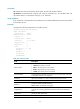
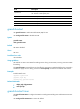
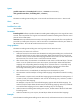
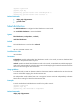
Table Of Contents
- Title Page
- Contents
- MCE commands
- description
- display bgp group ipv4 vpn-instance
- display bgp peer ipv4 vpn-instance
- display ip vpn-instance
- domain-id
- export route-policy
- ext-community-type
- import route-policy
- ip binding vpn-instance
- ip vpn-instance
- ipv4-family
- route-distinguisher
- route-tag
- routing-table limit
- vpn-instance-capability simple
- vpn-target
- IPv6 MCE commands
- Basic MPLS commands
- Static LSP commands
- LDP commands
- accept-label
- advertise-label
- backoff
- display mpls ldp discovery
- display mpls ldp fec
- display mpls ldp interface
- display mpls ldp lsp
- display mpls ldp parameter
- display mpls ldp peer
- display mpls ldp summary
- graceful-restart
- graceful-restart timer
- label-distribution
- loop-detect
- lsp-trigger
- lsr-id
- maxhops
- md5-authentication
- mpls ldp
- mpls ldp enable
- mpls ldp timer
- mpls ldp transport-address
- pv-limit
- reset mpls ldp
- session protection
- targeted-peer
- vpn-instance
- Tunnel policy commands
- MPLS L3VPN commands
- description (VPN instance view)
- display bgp group vpnv4
- display bgp peer vpnv4
- display bgp routing-table ipv4 unicast inlabel
- display bgp routing-table ipv4 unicast outlabel
- display bgp routing-table vpnv4
- display bgp routing-table vpnv4 advertise-info
- display bgp routing-table vpnv4 as-path-acl
- display bgp routing-table vpnv4 community-list
- display bgp routing-table vpnv4 inlabel
- display bgp routing-table vpnv4 outlabel
- display bgp routing-table vpnv4 peer
- display bgp routing-table vpnv4 statistics
- display ip vpn-instance
- domain-id
- export route-policy
- ext-community-type
- import route-policy
- ip binding vpn-instance
- ip vpn-instance (system view)
- ipv4-family (VPN instance view)
- ipv4-family vpnv4
- nesting-vpn
- peer next-hop-invariable
- peer upe
- peer upe route-policy
- policy vpn-target
- refresh bgp vpnv4
- reset bgp vpnv4
- route-distinguisher (VPN instance view)
- route-tag
- routing-table limit
- rr-filter
- tnl-policy (VPN instance view/IPv4 VPN view/IPv6 VPN view)
- vpn popgo
- vpn-target (VPN instance view/IPv4 VPN view/IPv6 VPN view)
- IPv6 MPLS L3VPN commands
- display bgp group vpnv6
- display bgp peer vpnv6
- display bgp routing-table vpnv6
- display bgp routing-table vpnv6 advertise-info
- display bgp routing-table vpnv6 as-path-acl
- display bgp routing-table vpnv6 community-list
- display bgp routing-table vpnv6 inlabel
- display bgp routing-table vpnv6 outlabel
- display bgp routing-table vpnv6 peer
- display bgp routing-table vpnv6 statistics
- ipv6-family (VPN instance view)
- ipv6-family vpnv6
- policy vpn-target
- refresh bgp vpnv6
- reset bgp vpnv6
- rr-filter
- MPLS L2VPN commands
- VPLS commands
- backup-peer
- description
- display l2vpn ldp
- display l2vpn forwarding
- display l2vpn mac-address
- display l2vpn pw
- display l2vpn pw-class
- display l2vpn service-instance
- display l2vpn vsi
- encapsulation
- l2vpn enable
- l2vpn switchover
- mac-learning enable
- mtu
- peer
- pw-class
- pw-type
- pwsignaling
- reset l2vpn mac-address
- revertive
- service-instance
- shutdown
- vsi
- xconnect vsi
- Support and other resources
- Index
64
Views
LDP view, LDP-VPN instance view
Predefined user roles
network-admin
Parameters
all: Enables LDP to use all routes to generate LSPs.
prefix-list prefix-name: Specifies an IP prefix list by its name, a case-sensitive string of 1 to 63 characters.
LDP can only use the routes permitted by the IP prefix list to generate LSPs.
Usage guidelines
The default LSP generation policy depends on the label distribution control mode.
• In Ordered mode, LDP can only use the Loopback interface address routes with a 32-bit mask and
the routes with a 32-bit mask that match the FECs of label mappings received from downstream LSRs
to generate LSPs.
• In Independent mode, LDP can use all routes with a 32-bit mask to generate LSPs.
After you configure an LSP generation policy, LDP uses all routes or the routes permitted by the IP prefix
list to generate LSPs, regardless of the label distribution control mode.
HP recommends that you use the default LSP generation policy.
Examples
# Configure an LSP generation policy to use only routes 10.10.1.0/24 and 10.20.1.0/24 to establish LSPs
for the public network.
<Sysname> system-view
[Sysname] ip prefix-list egress-fec-list index 1 permit 10.10.1.0 24
[Sysname] ip prefix-list egress-fec-list index 2 permit 10.20.1.0 24
[Sysname] mpls ldp
[Sysname-ldp] lsp-trigger prefix-list egress-fec-list
Related commands
ip prefix-list (Layer 3—IP Services Command Reference)
lsr-id
Use lsr-id to configure an LDP LSR ID.
Use undo lsr-id to delete the configured LDP LSR ID.
Syntax
lsr-id lsr-id
undo lsr-id
Default
No LDP LSR ID is configured. LDP uses the MPLS LSR ID configured by the mpls lsr-id command for both
the public network and VPN instances.
Views
LDP view, LDP-VPN instance view