
R21xx-HP FlexFabric 11900 MPLS Configuration Guide



9
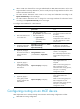
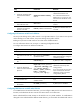
Ste
p
Command
Remarks
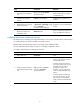
3. (Optional.) Configure the
OSPF domain ID.
domain-id domain-id [ secondary ]
The default domain ID is 0.
Perform this configuration only on
the MCE.
The domain ID of an OSPF process
is included in the routes generated
by the process. When an OSPF
route is redistributed into BGP, the
OSPF domain ID is included in the
BGP VPN route and delivered as a
BGP extended community
attribute.
An OSPF process can be
configured with only one domain
ID. Domain IDs of different OSPF
processes are independent of each
other.
All OSPF processes of a VPN must
be configured with the same
domain ID for routes to be correctly
advertised. OSPF processes on PEs
in different VPNs can be
configured with domain IDs as
desired.
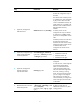
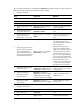
4. (Optional.) Configure the type
codes of OSPF extended
community attributes.
ext-community-type { domain-id
type-code1 | router-id type-code2
| route-type type-code3 }
The defaults are as follows:
• 0x0005 for Domain ID.
• 0x0107 for Router ID.
• 0x0306 for Route Type.
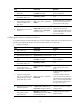
5. (Optional.) Configure the
external route tag for
imported VPN routes.
route-tag tag-value
By default, no route tag is
configured.
In some networks, a VPN might be
connected to multiple MCEs.
When one MCE advertise the
routes learned from BGP to the
VPN, the other MCEs might learn
the routes, resulting in routing
loops. To avoid such routing loops,
you can configure route tags for
VPN instances on an MCE. HP
recommends that you configure the
same route tag for the same VPN
on the MCEs.
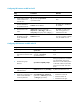
6. Redistribute remote site routes
advertised by the PE.
import-route protocol [ process-id
| all-processes | allow-ibgp ] [ cost
cost | route-policy
route-policy-name | tag tag | type
type ] *
By default, OSPF does not
redistribute routes from any other
routing protocol.