
R21xx-HP FlexFabric 11900 MPLS Configuration Guide


262
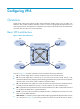
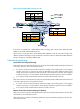
Figure 72 Source MAC address learning on a PE
If no packet is received from a MAC address before the aging timer expires, VPLS deletes the MAC
address to save MAC address table resources.
When an AC or a PW goes down, the PE deletes MAC addresses on the AC or PW and sends an LDP
address withdrawal message to notify all other PEs in the VPLS instance to delete those MAC addresses
for fast convergence of the MAC address table.
Traffic fowarding and flooding
Unicast traffic forwarding and flooding:
After a PE receives a unicast packet from an AC, the PE searches the MAC address table of the VSI bound
to the AC to determine how to forward this packet.
• If a match is found, the PE forwards the packet according to the matching entry. If the outgoing
interface in the entry is a PW, the PE inserts the PW label to the packet, adds the public tunnel
header to the packet, and then forwards the packet to the remote PE over the PW. If the outgoing
interface in the entry is a local interface, the PE directly forwards the packet to the local interface.
• If no match is found, the PE floods the packet to all other ACs and PWs in the VSI.
After a PE receives a unicast packet from a PW, the PE searches the MAC address table of the VSI bound
to the PW to determine how to forward this packet.
• If a match is found, the PE forwards the packet according to the matching entry. If the outgoing
interface in the entry is a local interface, the PE directly forwards the packet to the local interface.
• If no match is found, the PE floods the packet to all ACs in the VSI.
Multicast and broadcast traffic forwarding and flooding:
After a PE receives a multicast or broadcast packet from an AC, the PE floods the packet to all other ACs
and the PWs in the VSI bound to the AC.
After a PE receives a multicast or broadcast packet from a PW, the PE floods the packet to all ACs in the
VSI bound to the PW.