
3Com Switch 4200G Configuration Guide



Rapid Transition Configuration 143
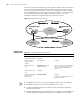
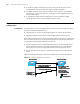
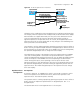
Figure 40 The MSTP rapid transition mechanism
Limitation on the combination of RSTP and MSTP exists to implement rapid transition.
For example, when the upstream switch adopts RSTP, the downstream switch adopts
MSTP and does not support RSTP mode, the root port on the downstream switch
receives no agreement packet from the upstream switch and thus sends no
agreement packets to the upstream switch. As a result, the designated port of the
upstream switch fails to transit rapidly and can only change to the Forwarding state
after a period twice the Forward Delay.
Some partners' switches adopt proprietary spanning tree protocols that are similar to
RSTP in the way to implement rapid transition on designated ports. When a switch of
this kind operates as the upstream switch of an S4200G series switch running MSTP,
the upstream designated port fails to change their states rapidly.
The rapid transition feature is developed to resolve this problem. When an S4200G
series switch running MSTP is connected in the upstream direction to a partner's
switch running proprietary spanning tree protocol, you can enable the rapid transition
feature on the ports of the S4200G series switch operating as the downstream
switch. Among these ports, those operating as the root ports will then send
agreement packets to their upstream ports after they receive proposal packets from
the upstream designated ports, instead of waiting for agreement packets from the
upstream switch. This enables designated ports of the upstream switch to change
their states rapidly.
Rapid Transition
Configuration
Prerequisites
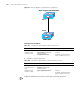
As shown in Figure 41, an S4200G series switch is connected to a partner's switch.
The former operates as the downstream switch, and the latter operates as the
upstream switch. The network operates normally.
The upstream switch is running a proprietary spanning tree protocol that is similar to
RSTP in the way to implement rapid transition on designated ports. Port 1 is a
designated port.
The downstream switch is running MSTP. Port 2 is the root port.
Designated port
Root port
Upstream switch Dow nstream switch
Send proposal packets
to request rapid transition
Send agreement packets
Root port changes to
Forw arding state and
sends agreement packets
to upstream switchDesignated port
change to
Forw arding state
Send agreement packets
Root port blocks
other non-edge ports
-
Designated port
Root port
Upstream switch Dow nstream switch
Send proposal packets
to request rapid transition
Send agreement packets
Root port changes to
Forw arding state and
sends agreement packets
to upstream switchDesignated port
change to
Forw arding state
Send agreement packets
Root port blocks
other non-edge ports
-