
HSG80 ACS Solution Software V8.6 for Compaq OpenVMS Installation and Configuration Guide

Planning a Subsystem 1–5
Failover Mode
Failover is a way to keep the storage array available to the host if one of the controllers
becomes unresponsive. A controller can become unresponsive because of a hardware
failure, such as a controller. Failover keeps the storage array available to the hosts by
allowing the surviving controller to take over total control of the subsystem.
Multiple-Bus Failover Mode
Multiple-bus failover mode has the following characteristics:
■ Host controls the failover process by moving the unit(s) from one controller to another
■ All units (0 through 199) are visible at all host ports
■ Each host has two or more paths to the units
All hosts must have operating system software that supports multiple-bus failover mode.
With this software, the host sees the same units visible through two (or more) paths. When
one path fails, the host can issue commands to move the units from one path to another. A
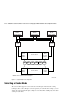
typical multiple-bus failover configuration is shown in Figure 1–5.
In multiple-bus failover mode, you can specify which units are normally serviced by a
specific controller of a controller pair. This process is called preferring or preferment.
Units can be preferred to one controller or the other by the PREFERRED_PATH switch of
the
ADD UNIT (or SET unit) command. For example, use the following command to prefer unit
D101 to “this controller”:
SET D101 PREFERRED_PATH=THIS_CONTROLLER
NOTE: This is an initial preference, which can be overridden by the hosts.
Keep the following points in mind when configuring controllers for multiple-bus failover:
■ Multiple-bus failover can compensate for a failure in any of the following:
❏ Controller
❏ Switch or hub
❏ Fibre Channel link
❏ Host Fibre Channel adapter
■ A host can redistribute the I/O load between the controllers
■ All hosts must have operating system software that supports multiple-bus failover
mode