
ACC Installation and Configuration Guide



Appendix A 83
Files, Utilities, and Daemons
Configuration Scripts
Configuration Scr ipts
acc_bld_lpbk
This script is used to produce a sample loopback ttgen configuration file.
It is run automatically when the ACC product is installed. If additional
ACC MUX cards are installed into the system, or if ACC MUX cards a re
moved within the system, this script can be useful for recreating a
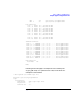
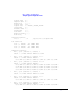
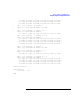
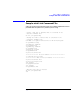
loopback configuration file. (Refer to the following section, “Sample
ttgen Configuration File” and examples.)
The script is run as follows:
% /opt/acc/lbin/acc_bld_lpbk -o <output file> \
-t <ttgen file header> [-p <protocol>]
The output f ile parameter indicates where the .answ file that is being
built will be written. This file name should have a .answ suffix, and it is
suggested that its path be /opt/acc/cfg/.
The ttgen file header parameter refers to a file that contains the TTGEN
file configuration fields that occur before the Interface-Definition
statement. The file /opt/acc/cfg/sample_header is provided for this
purpose. The script uses this a s the header of t he .answ file being
created. The script creates MUX s tatements for each ACC MUX card
that is currently installed in the system. It uses t he protocol parameter
if it is provided, or it uses /opt/acc/<card-type>/loopb ack.zabs if it is
not.
It then creates port definition statements for each port for each mux that
is installed. It defines the ports differently for T 1/E1 4-Channel interface
cards, as seen in the examples that follow. Even numbered ports are
defined as internally clocked, and odd ports are externall y clocked.
PORTTEST term entries are created for each port. This allows the
zmntr loopbacktesttoberunoneachport.
A MONITOR term entry is created for each mux so that the watch
feature can be used.