
ACC Utilities Reference Guide


204 Chapter9
ZNODE - Remote Node Daemon
Remote Node TTGEN Configuration Requirements
Remote Node TTGEN Configuration
Requirements
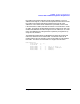
Node configuration information used by the znode daemon must be
added to both the local and remote node TTGEN configuration files. The
first item that must be configured is the number of nodes that will be
communicated with by the programs on the system, including the local
node. For example, if a program will communicate with 4 remote nodes,
the total number of nodes will be 5. This is configured in the main
“Configuration” section of the TTGEN configuration file, e.g.
Node-Entry 5
The number of specified Node-Entry maybemorethantheactually
defined nodes (in the above example, Node-Entry of 6,7,8,... are also
acceptable).
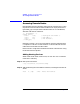
The last section in the TTGEN configuration file before the End$
statement is the Node-Definition section. In this section, there is a
Flow-Control field that configures low and high water marks. The
Flow-Control field specifies the limit of messages that can be accepted.
For example, ”50 1000” means stop accepting messages when there are
1000 messages in the queue and begin to accept messages when the
queue drops to 50. If this field is not specified, there is no flow control. It
is recommended that you specify the flow control parameters.
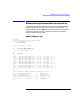
The local node must be configured, and it must be given a node number.
This number can be used by programs on other nodes to refer to it. For
example, if the local node number is 10, programs on remote nodes can
make requests for node 10. Programs on the local node can refer to the
localnodeas10oras0.
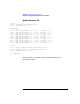
Each of the remote nodes that will be communicated with by t he l ocal
node must be configured. The node number must be configured, followed
byatimeoutvalue.Whenarequestismadetoaremotenode,aresponse
is expected to be received within the timeout period (which is in seconds).
In the case that a response is not received w ithin the configured timeout
period, then an error is returned to the application program on the call
that is being made to the remote node.
The last parameters provide addressing information for how to reach the
node. A single address can be given, in which case all requests from the