
ACC Utilities Reference Guide


Chapter 12 235
PMON - ACC E1/T1 Line Monitor
Receiving E1/T1 Line Status with a Customer Application
the lines). If the code is less than or equal to 63, then it is one of the
general zcom status codes (used to i ndicate the line going UP or DOWN).
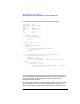
This is an example of the kind of processing required on receiving this
type of message:
switch(zmhd.mid.mstype) {
.
.
.
case ZCOM_MSTYPE_RSLT:
if (err = zinfo (&zmhd.mid.mzsrce, 1, (char*)<t,
sizeof(ltt))) {
--- Report error ---
}
rreq = zmhd.mrq.mrqcode;
rstat &= 0x7f;
if (rreq == ZCOM_MRQCODE_STATUS) {
if (rstat > 63) {
--- E1/T1 line event ---
} else {
--- General ZCOM status ---
}
}
break;
DescriptivetexttogowiththeE1/T1statuscodescanbefoundin
“/opt/acc/msg/def.falc.txt”. T h is text can be accessed programatically
with the zcommess() function. For example:
#define E1T1STAT(st) zcommess("falc", st, NULL)
.
.
.
/* Program initialisation - Load ZCOM message file */
if (zcommfile(NULL) == -1) {
--- Report error ---
}
.
.
.
/* Print E1/T1 status message - status code in rstat */
printf ("%s\n",E1T1STAT(rstat));
It is important to handle dynamic configuration events correctly. When
an E1 /T1 port that was previously undefined, is configured, and a
ZCOM_SETYPE_RECONFIG event is g enerated by the responsible
application, PMON will configure a monitor device on that port.