
ACC Utilities Reference Guide


66 Chapter2
TTGEN-ZCOMSystemTableGenerator
Creating the TTGEN Configuration File
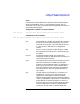
These two statements would cause the following Term entries to b e
automatically created by TTGEN:
Term 061 1:1 X25.SVC.IN 0000h 3200h 99 0000 ”Level.3 SVC IN”
Term 062 1:1 X25.SVC.IN 0000h 3200h 99 0000 ”Level.3 SVC IN”
Term 063 1:1 X25.SVC.IN 0000h 3200h 99 0000 ”Level.3 SVC IN”
Node Definition
The Node-Definition section is optional, and is used to specify all nodes
thataretobeincludedintheZCOMsubsystem.IfNode-Definition is left
out completely, Local-Node defaults to 1, with no remote nodes
configured. If Node-Definition is specified, then at least Local-Node must
be defined (whereas Remote-Node is optional).
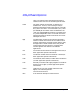
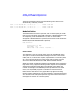
Node-Definition
Flow-Control low high
Local-Node nnn
Remote-Node node timeout hostname ...
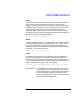
Flow-Control
This defines the “low” and “high” water marks for t he ZNODE queue.
Thisqueueisusedtoholdthedatamessagestobesenttotheremote
nodes (such as, a remote API request, response data to a remote system,
etc.). The LDM (ZCOM driver) uses the high and low water marks to
control the data flow between the LDM and t he ZNODE daemon.
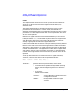
When the number of pendingmessages on the ZNODE queuereaches the
high-water mark, programs initiating remote requests are suspended to
avoid excessive buffers being held on the ZNODE queue. When the
number of messages in the ZNODE queue drops below the low-water
mark, such suspended programs are allowed to resume execution.
Note that this mechanism is only applicable to programs initiating
remote requests and does not limit the messages or responses generated
as a result of ZCOM subsystem operation (e.g. when a terminal returns a
message to its receiver on a remote system).