
ACC X.25 Protocol User's Guide

114 Chapter4
X.25 Application Programming
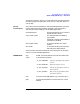
ZX25L2STAT_RCVR (3X) — ACC X.25
ZX25L2STAT_RCVR (3X) — ACC X.25
NAME zx25l2stat_rcvr – Setup receiver for X.25 link status messages
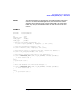
SYNOPSIS
#include <zcom/zcomsys.h>
#include <zcom/zcomx25.h>
int zx25l2stat_rcvr (zxip, action, lzap, pzap)
zx25info_type *zxip;
int action;
zaddr_type *lzap;
zaddr_type *pzap;
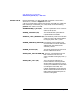
DESCRIPTION The z x25l2stat_rcvr routine is us ed to add or remove the primary or
shared receiver for X.25 Link unsolicit ed status messages. There can be
only one primary X.25 link status receiver. If more than one request is
issued to add a primary receiver, the last one issued takes precedence.
If more than one application program needs to receive the X.25 link
status messages, the application should set itself up as a shared receiver.
Any number of applications may request X.25 link status messages as a
shared receiver.
Once this routine has been successfully called, X.25 link status messages
will continue to be queued on the application program ZLU specified in
pzap until another zx25l2stat_rcvr is issued to remove the program ZLU
as a receiver of Link status messages. The status messages are retrieved
using the zread() routine.
An application program can indicate that it no longer wishes to receive
X.25 link status messages by issuing a zx25l2stat_rcvr() call with the
same parameters as the specified in the original zx25 l2stat_rcvr()
request, and setting the action parameter to Z cDEL_PR IMARY or
ZcDEL_SHARED.
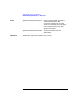
Note that extreme care must be taken to make sure the application
removesitselfasareceiverofX.25linkstatusmessagesbeforethe
application program terminates. Failure to perform this action could
cause the ZCOM subsystem to run out of buffer space. T hat is, the link
status messages would continue to be sent to the program’s input queue
even though the program is no longer running.