
AB291A Fabric Clustering System Support Guide (12-port Switch), April 2004
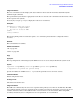
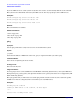
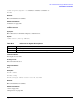
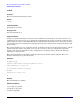
Table Of Contents
- About This Document
- 1 Introduction to Technology
- 2 Hardware Overview
- 3 Installation Planning
- 4 Installing HP Fabric Clustering System
- 5 Administration and Management
- HP-UX Host Administration and Management
- Switch Administration and Management
- CLI Overview
- Using the CLI
- Advanced Switch Setup
- Configuration, Image, and Log Files
- Configuration, Image, and Log File Overview
- File Management
- Listing Configuration, Image, and Log Files
- Viewing Configuration Files
- Viewing Log Files
- Saving Configuration Files
- Saving for System Reboot
- Saving the Backup Configuration
- Specifying the Configuration to Use at
- Saving and Copying Files
- Downloading Files to the System
- Deleting Configuration, Image, and Log Files
- Managing Log Files
- Understanding the Log Format
- Uploading Log Files
- Administering the System
- 6 Monitoring and Troubleshooting
- A Specifications
- B HP 12-Port 4X Fabric Copper Switch Commands
- Show Commands
- show arp ethernet
- show arp IB
- show authentication
- show backplane
- show boot-config
- show card
- show card-inventory
- show clock
- show config
- show fan
- show host
- show ib
- show ib sm configuration
- show ib sm multicast
- show ib sm neighbor
- show ib sm node subnet-prefix
- show ib sm partition
- show ib sm port
- show ib sm service
- show ib sm switch
- show ib-agent channel-adapter
- show ib-agent summary
- show ib-agent switch
- show ib-agent switch linear-frd-info
- show ib-agent switch all mcast-info lid
- show ib-agent switch all node-info
- show ib-agent switch all pkey-info
- show ib-agent switch port-info
- show ib-agent switch sl-vl-map
- show ib-agent switch switch-info
- show interface ib
- show interface ib sm
- show interface ib sm statistics
- show interface mgmt-ethernet
- show interface mgmt-ib
- show interface mgmt-serial
- show ip
- show location
- show logging
- show ntp
- show power-supply
- show running-status
- show sensor
- show snmp
- show system-services
- show terminal
- show trace
- show user
- show version
- IP Commands
- HP Fabric Clustering System Commands
- Administrative Commands
- action
- boot-config
- broadcast
- card
- clock
- configure
- copy
- delete
- dir
- disable
- enable
- exec
- exit
- ftp-server enable
- gateway
- help
- history
- hostname
- install
- interface
- interface mgmt-ethernet
- interface mgmt-ib
- ip
- location
- login
- logging
- logout
- more
- ntp
- ping
- radius-server
- reload
- shutdown
- snmp-server
- telnet
- terminal length
- terminal time-out
- trace
- type
- username
- who
- write
- Show Commands
- C How to Use Windows HyperTerminal
- Glossary

HP 12-Port 4X Fabric Copper Switch Commands
Administrative Commands
Appendix B
275
Usage Guidelines:
The more command is used to display text data resident on the chassis in increments determined by the
terminal length command.
The specified file-system must be appropriate for the file. See also the “dir” command to list the names of files
in the respective file-systems.
Press any key (except “q” or “Q”) to display the next screen of text lines.
Examples:
HP-IB# more config:sup-config
! Release-1.1.3hp/build023
! Mon Jan 12 19:49:38 2003
enable
config terminal
The lines beginning with an exclamation point (!) are comments ignored when the configuration file is
executed.
Defaults:
This command has no defaults.
Related Commands:
“dir” on page 255
“telnet” on page 282
ntp
Synopsis:
The ntp configuration commands specify the NTP servers to use to set and synchronize the system clock.
Syntax:
ntp [server-one ip-address | server-two ip-address | server-three ip-address]
no ntp [server-one | server-two | server-three]
ip is the IP address of an NTP server. no ntp resets the specified server to all zeros (0.0.0.0).
Command Modes:
Global-configuration mode.
Privilege Level:
Unrestricted read-write user.
Usage Guidelines
The NTP server indicated by the server-one argument is the primary server that is checked first. The NTP
server indicated by the server-two argument is the secondary server that is used in the event sever-one is not
available. And server-three is the fallback in the event server-two is also unavailable. When using NTP,
secondary and tertiary server configurations are not required but are recommended.